Welfare and benefits
How generous should the safety net be?
Welfare covers the benefits a state gives to people who are out of work, sick, disabled, poor or old. The disagreement is about how generous and how conditional that help should be. One side says a strong safety net is a basic part of a decent society, and that people should not fall into hardship through bad luck. The other side says generous benefits can trap people in dependence, and that family, charity and community can help more effectively than government programs.
On the 12 Axes this issue moves the welfare axis. Wanting benefits limited so that work pays, or believing that charity and families should do more, points toward the Self-reliant pole. Support for a broader state safety net points toward the Shared pole. The issue cuts across the left and right divide. Many conservatives value strong communities and charity but also support help for the genuinely needy, and many on the left share concerns about dependency while arguing that work incentives and support can go together. Disagreements often focus on who deserves help, how it should be tested, and who should provide it.
What each side argues
Generous safety net
- Supporters argue that a decent society should protect people from poverty, whatever the reason they fall into it.
- Supporters say welfare keeps families stable and lets people recover from setbacks and return to work.
- Supporters believe government programs reach everyone in need, while charities and families cannot cover every case.
Limited, conditional help
- Opponents argue that very generous benefits can reduce the incentive to find work.
- Opponents say charities and local communities understand people's needs better and can help in a more personal way.
- Opponents believe that families should take the main responsibility for caring for their elderly relatives.
3 statements on welfare and benefits
- Welfare benefits should be limited so that people have a strong reason to find work.Agreeing moves you toward Self-reliant
- Charities and local communities help people in need better than government programs do.Agreeing moves you toward Self-reliant
- Families, not the government, should be mainly responsible for caring for elderly relatives.Agreeing moves you toward Self-reliant
What politicians have said and done
 Angus TaylorOnly Australian citizens would qualify for the NDIS and 17 welfare programs under his plan, though people already receiving them would keep access.Source: rsm.global
 Ciro NogueiraAs minister in July 2022 he said the government aimed to pay the raised R$600 Auxílio Brasil from the amendment costing about R$41.25 billion.Source: poder360.com.br
- Ciro NogueiraIn November 2022 he said the transition amendment should guarantee only the R$600 benefit and the real rise in the minimum wage.Source: poder360.com.br
 Jair BolsonaroHis 2022 platform promised to keep Auxílio Brasil at R$ 600 from January 2023 and to exempt workers earning up to five minimum wages from income tax.Source: poder360.com.br
 Jerônimo RodriguesHis 2026 program prioritises women, older adults, children and workers, the fight against hunger and extreme poverty, and the use of science, technology and AI in public services.Source: cnnbrasil.com.br
 Pablo MarçalHis 2026 presidential plan has seven missions, progressive tax cuts, a Ministry of Entrepreneurship, company registration in 24 hours and keeping Bolsa Família.Source: sbtnews.sbt.com.br
 Romeu ZemaHe has said he wants to widen the situations in which teenagers can legally work, and that benefits should be conditioned on accepting formal jobs.Source: mais.opovo.com.br
 Ronaldo CaiadoWould keep income transfer programmes tied to training, health and daycare, and restrict online betting, including advertising.Source: congressoemfoco.com.br
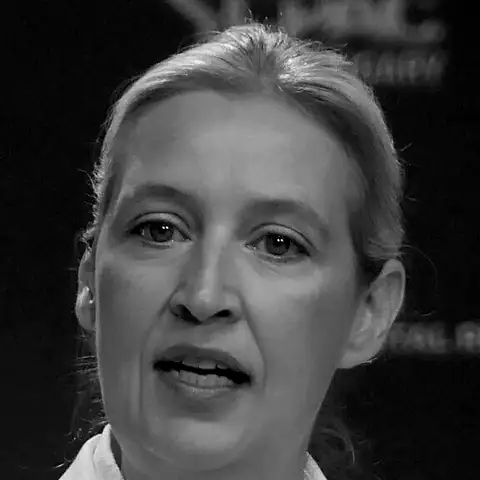 Alice WeidelShe opposed the Grundsicherung law of March 2026, which took the place of the Bürgergeld.Source: abgeordnetenwatch.de
 Friedrich MerzIn March 2026 he voted to swap the Bürgergeld for a new Grundsicherung, which sets stricter work requirements and sanctions.Source: abgeordnetenwatch.de
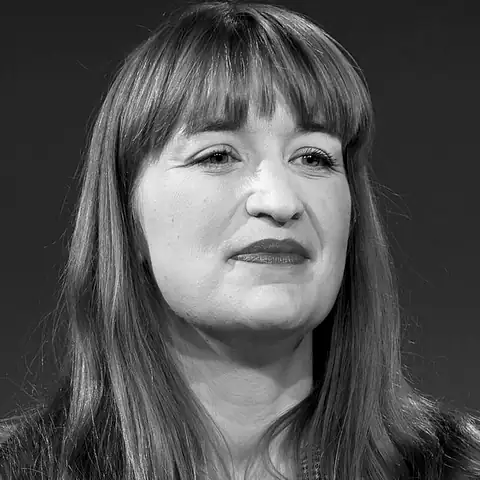 Heidi ReichinnekIn March 2026 she voted against swapping the Bürgergeld for the Grundsicherung, which is stricter.Source: abgeordnetenwatch.de
 Lars KlingbeilA March 2026 vote of his backed the Grundsicherung, with tougher sanctions, as the replacement for the Bürgergeld.Source: abgeordnetenwatch.de
 Markus SöderIn September 2026 he claimed that the wrong kind of social spending takes up too much of Germany's money, and he urged Bärbel Bas, who was then labour minister, to act.Source: zdfheute.de
- Andy BurnhamProposed a National Care Service for England that would be funded entirely without borrowing, while pledging to respect the fiscal rules.Source: labour.org.uk
 John SwinneyChild poverty is, in his words, the top priority to end, and his government fully mitigates the bedroom tax in Scotland.Source: snp.org
 Kemi BadenochShe proposes yearly savings of over £70 billion, of which £36 billion would come from welfare. Reducing the deficit would take half, and tax cuts the remainder.Source: conservatives.com
 Nigel FarageReform's August 2026 proposal was for a welfare bill reduced by £50 billion, including the replacement of personal independence payments for working-age adults.Source: itv.com
- Nigel FarageThe two-child benefit cap would be restored in full, Reform said in February 2026, reversing a pledge made earlier to lift it.Source: lbc.co.uk
 Giorgia MeloniThe citizenship income benefit was phased out by her government for those judged able to work, on the grounds that it discouraged employment.Source: ansa.it
At each end of Welfare
People whose overall profile leans furthest each way on the axis this issue moves most. A lean on the axis is not a stance on this exact issue.





More welfare issues
Welfare and benefits: questions
What is welfare?
Welfare refers to government programs that support people in need, such as unemployment benefits, housing help, disability support and income assistance. Systems vary widely between countries in who qualifies and how generous they are. Debate centers on cost, fairness and the effect on work.
Do welfare benefits discourage work?
It depends on how the system is designed. If benefits are withdrawn sharply as someone earns more, work can pay little. Well-designed systems try to keep work worthwhile. Researchers disagree on how large the effect is, and it varies with the type of benefit.
Is welfare left or right wing?
Support for a generous welfare state is usually seen as left wing, and a smaller one as right wing. In practice, many conservatives back a safety net but want it targeted or run through families and charities. On the 12 Axes it moves the welfare axis.