Climate change
How far should governments go on climate?
Almost every government accepts that the climate is changing. The argument is about how fast to act, who bears the cost, and what tools to use. One side wants strict rules on business, binding international agreements and, if needed, lower consumption, even if growth slows. The other side prefers to rely on innovation, markets and gradual change, arguing that new technology will cut emissions more cheaply than limits that could hurt jobs and living standards.
On the 12 Axes this issue spreads across three axes. Strict regulation of business points toward the Planned pole on markets. Insisting on binding agreements between countries points toward the Cooperation pole on foreign affairs. Willingness to accept a lower standard of living points toward the Caution pole on technology, while faith in technology to solve problems points toward Embrace. The issue cuts across left and right in interesting ways. Some conservatives value conservation and favor nuclear power or carbon pricing, and some on the left are wary of nuclear energy or of global deals. Many people who agree on the goal still disagree sharply on the means.
What each side argues
Strong action
- Supporters argue that strict rules on emissions are justified even if they slow growth, since the long-term costs of inaction are greater.
- Supporters say climate change crosses borders, so only binding international agreements can work.
- Supporters believe some lifestyle change may be needed, and it is fairer to start now than to force it later.
Technology and growth
- Opponents argue that heavy regulation can raise costs and cost jobs, with ordinary households paying the price.
- Opponents say new technology such as clean energy and storage will cut emissions without asking people to live differently.
- Opponents worry that binding agreements can limit national choice, and that other countries may not keep their promises.
4 statements on climate change
- The government should strictly regulate businesses to reduce climate change, even if it slows economic growth.Agreeing moves you toward Planned
- Climate change can only be solved through binding agreements between countries.Agreeing moves you toward Cooperation
- People should accept a lower standard of living if that is needed to protect the environment.Agreeing moves you toward Caution
- New technology will solve most environmental problems without people needing to change how they live.Agreeing moves you toward Embrace
What politicians have said and done
 Angus TaylorHe would drop the Safeguard Mechanism along with Australia's net zero targets, let coal plants run for as long as they can, and end the nuclear power ban.Source: rsm.global
 Anthony AlbaneseHis government legislated net zero and committed to cutting emissions by 62 to 70 percent by 2035, while investing in clean energy manufacturing at home.Source: alp.org.au
 David ShoebridgeAlongside his deputy, wants no more coal or gas projects, and has said the aim of the Greens is to supplant Labor, not to reform it.Source: reneweconomy.com.au
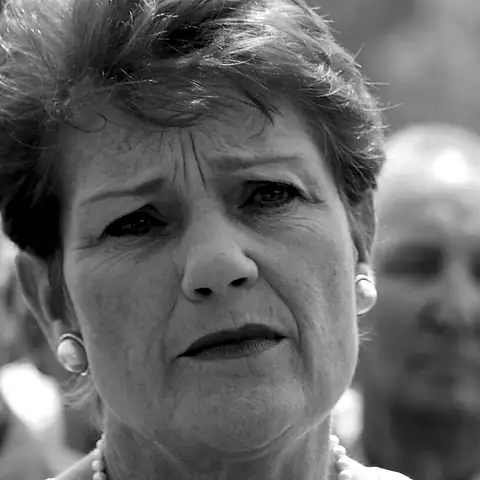 Pauline HansonShe is against net zero and in favour of coal, gas and nuclear power.Source: onenation.org.au
 Helder BarbalhoHe proposed paying family farmers three times more to preserve forest than they earn from farming, and set up a voluntary jurisdictional carbon credit system with UNEP and Ipam.Source: dol.com.br
- Helder BarbalhoAt COP30 in Belém he presented the Vale Bioamazônico brand for the state's forest economy, and Pará filed documentation for a 38 million tonne CO2 reduction in 2023 with the ART TREES standard.Source: oliberal.com
- Helder BarbalhoHe delivered to President Lula a letter signed by all 27 governors asking the COP30 final text to recognise the role of subnational governments in climate targets.Source: oliberal.com
 Marina SilvaHer economic positions have included fiscal responsibility, a freely floating currency and an independent central bank, alongside a socio-environmental model with green jobs and a 2050 carbon-neutrality goal.Source: cidob.org
 Avi LewisUnder his Green New Deal, Ottawa would refuse fresh federal approvals for pipelines and for LNG terminals or offshore oil, while 2 percent of GDP went to climate action.Source: lewisisleader.ca
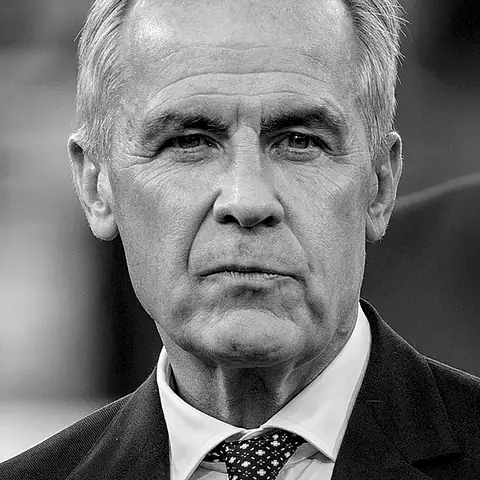 Mark CarneyHis first act as Prime Minister, in March 2025, was an order in council ending the consumer carbon tax; carbon pricing for industry stayed.Source: cbc.ca
 Pierre PoilievreHis campaign promised to cancel the federal carbon tax, build more pipelines and repeal the ban on oil tankers off northern British Columbia.Source: globalnews.ca
- Pierre PoilievreHe proposed a Canadian Sovereignty Act that would repeal Bills C-69 and C-48 and end both the industrial carbon tax and the EV sales mandate. It would also scrap capital gains tax on money reinvested in Canada.Source: globalnews.ca
 Kemi BadenochHer plans would end the carbon tax, lift the prohibition on issuing new North Sea oil and gas licences, and do away with the Climate Change Act.Source: conservatives.com
 Nigel FarageNet zero targets in the UK have his opposition, and Reform's manifesto promised to scrap net zero along with related subsidies.Source: pbctoday.co.uk
 Giorgia MeloniIn 2026 she and nine other EU leaders requested that the EU's emissions trading system be reviewed, with free allowances running longer.Source: ansa.it
 Alexandria Ocasio-CortezAlongside Senator Ed Markey she wrote the Green New Deal resolution. Its April 2021 reintroduction set a net-zero emissions goal and called for moving off fossil fuels.Source: cbsnews.com
 Donald TrumpReturning to office in January 2025, he ordered the US to withdraw from the Paris climate agreement that same first day.Source: whitehouse.gov
 Ted CruzFederal greenhouse gas rules have met his opposition, and he has questioned what scientists agree on about climate change.Source: science.org
At each end of Technology
People whose overall profile leans furthest each way on the axis this issue moves most. A lean on the axis is not a stance on this exact issue.





More technology issues
Climate change: questions
What is a carbon tax?
A carbon tax puts a price on each unit of carbon dioxide released, so that polluters pay for the damage. The aim is to push firms and households toward cleaner options. Supporters say it is efficient. Critics say it raises living costs and falls hardest on lower-income people unless offset.
Do we need international agreements on climate change?
Supporters say yes, because emissions anywhere affect the whole planet, and countries are reluctant to act alone. Critics say binding deals are hard to enforce and can limit national choices. Many people favor a mix of agreements and domestic action.
Is climate action left or right wing?
Strong climate action is usually associated with the left, and caution about costs with the right. But the divide is not total. Some conservatives support carbon pricing or nuclear power, and some on the left oppose particular technologies. On the 12 Axes the issue moves markets, foreign and technology.