Artificial intelligence
How should AI be governed?
Artificial intelligence is advancing quickly, and people disagree about how much control it needs. Some believe innovation works best when firms are free to build and release products, with rules added only when real harms appear. Others think the most powerful systems carry risks that are too large to leave to companies alone, from job losses to misuse to systems that behave in ways no one intended, and call for approvals, limits or a slower pace.
On the 12 Axes this issue moves several axes at once. Freedom to release products without approval points toward the Free pole on markets. Slowing advanced development or limiting automation of jobs points toward the Caution pole on technology. Calling for shared global rules points toward the Cooperation pole on foreign affairs. The debate does not follow the old left and right split well. Some tech-minded libertarians and some progressives worry about risk, while some on the left embrace the technology and some on the right want strong controls for security or moral reasons. Worker protection, national competition and safety often pull in different directions.
What each side argues
Govern it closely
- Supporters of tighter rules argue that the most advanced systems are risky enough that development should slow until the dangers are better understood.
- Supporters say shared international rules are needed, since AI crosses borders and one country cannot manage it alone.
- Supporters of limits say workers should be protected from being replaced faster than they can adapt.
Let innovation lead
- Opponents argue that requiring approval before release would slow progress and favor large firms that can afford compliance.
- Opponents say a country that restricts AI risks falling behind rivals who do not.
- Opponents believe the technology will create new work and new benefits, and that rules should respond to actual harm.
4 statements on artificial intelligence
- Companies developing artificial intelligence should be free to release products without government approval.Agreeing moves you toward Free
- Countries should create shared global rules for artificial intelligence.Agreeing moves you toward Cooperation
- Development of the most advanced artificial intelligence should be slowed until its risks are better understood.Agreeing moves you toward Caution
- Companies should be limited in replacing workers with robots and artificial intelligence.Agreeing moves you toward Caution
What politicians have said and done
 Avi LewisWhile campaigning for the leadership, urged a moratorium on new AI data centres, with jobs, privacy and the environment as his stated concerns.Source: lewisisleader.ca
 Alexandria Ocasio-CortezShe was a co-sponsor in March 2026 of a bill, the Artificial Intelligence Data Center Moratorium Act, that would pause building new AI data centers until national safeguards are set.Source: wcax.com
 Bernie SandersHis Artificial Intelligence Data Center Moratorium Act, introduced in March 2026, calls for a halt to new AI data center building until safeguards for workers and communities are established nationally.Source: wcax.com
 Donald TrumpHis administration's July 2025 AI Action Plan puts the emphasis on dismantling regulatory barriers, constructing data centers and promoting exports of American AI.Source: akingump.com
 Gavin NewsomIn September 2025 he signed SB 53, a law that obliges big developers of frontier AI to publish safety frameworks and to report critical safety incidents.Source: gov.ca.gov
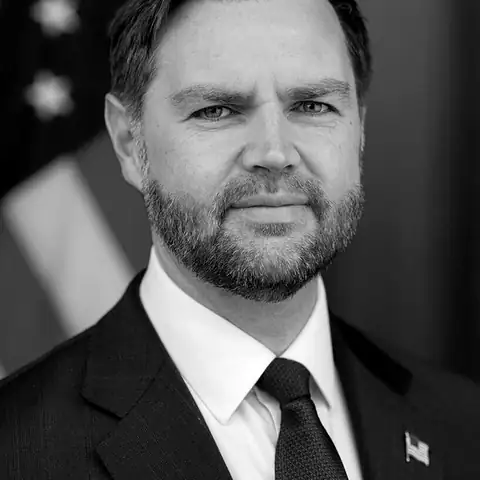 JD VanceIn Paris, at the AI Action Summit, he warned in February 2025 that over-regulating the AI sector might kill the industry while it was only taking off.Source: presidency.ucsb.edu
 Ron DeSantisIn 2026 he asked for a Bill of Rights on AI that would limit chatbots for minors. It passed the state Senate. The House did not take it up in the regular session, and did not in an April 2026 special session either.Source: clickorlando.com
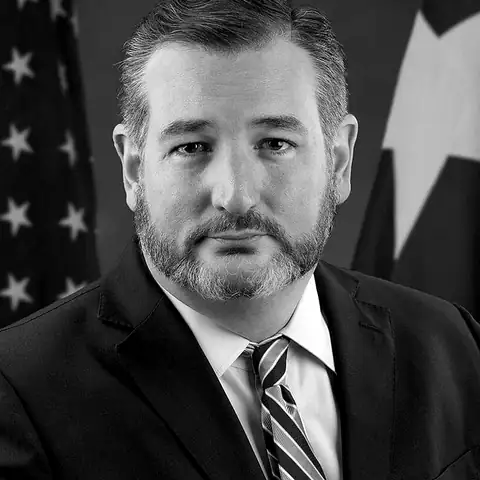 Ted CruzIn September 2025 he released an AI policy framework and introduced the SANDBOX Act, under which AI developers could ask for waivers from federal rules.Source: commerce.senate.gov
- Ted CruzThe Senate voted 99-1 to strip out the ten-year ban on state AI regulation that he proposed for the 2025 budget bill.Source: nytimes.com
At each end of Technology
People whose overall profile leans furthest each way on the axis this issue moves most. A lean on the axis is not a stance on this exact issue.







More technology issues
Artificial intelligence: questions
Should artificial intelligence be regulated?
Most people agree some rules are needed, but they disagree on how much. Supporters of regulation point to safety, fairness and jobs. Critics worry that heavy rules slow innovation or lock in big companies. The debate is mainly about timing, scope and who should set the rules.
What are the main risks people raise about AI?
People raise worries about job displacement, bias in automated decisions, misuse for fraud or surveillance, and loss of control over very powerful systems. Others stress the benefits in medicine, science and productivity. The disagreement is about how to weigh these risks against the gains.
Is AI regulation left or right wing?
It does not map cleanly onto left and right. Worker protection is often a left wing concern, while free-market conservatives prefer light rules. But national security and moral worries also push some on the right toward strong controls. On the 12 Axes it moves technology, markets and foreign affairs.