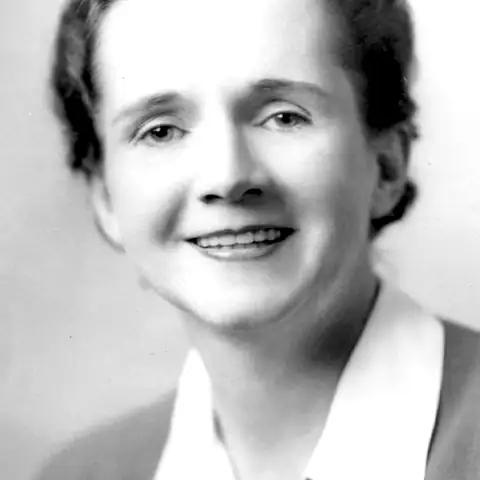
Who was Rachel Carson?
Rachel Carson, born in Springdale, Pennsylvania, in 1907, switched from English to biology and joined the U.S. Bureau of Fisheries in 1935. She rose to editor in chief of its publications, and her sea books made her a trusted public voice for science. The Sea Around Us won the National Book Award for nonfiction. Silent Spring appeared in 1962 after serialization in The New Yorker. Chemical companies threatened suits and attacked her credibility, but a presidential panel in 1963 backed her findings. She was ill with breast cancer while writing it, and she died in Silver Spring, Maryland, in April 1964.
Political views
- Warned in Silent Spring that pesticides, especially DDT, harmed wildlife and could reach people through food and water.Source: encyclopedia.com
- Did not call for an outright ban on synthetic pesticides, but for more research on their effects on plants, animals and humans.Source: encyclopedia.com
- Argued that people should be able to avoid exposure to potentially harmful materials, even when companies pointed to economic concerns.Source: encyclopedia.com
- Challenged the assumption that human domination of nature was the right path, and framed the issue as a moral responsibility to future generations.Source: rachelcarson.org
- Urged the public to question authority and ask who speaks and why.Source: rachelcarson.org
- Testified before a U.S. Senate committee in 1963, urging labeling of environmental damage on products.Source: nps.gov
Legacy
Admirers credit Carson with launching the environmental movement; her work is linked to the creation of the Environmental Protection Agency, the first Earth Day in 1970 and the 1972 U.S. DDT ban. She received the Presidential Medal of Freedom in 1980. Critics at the time, including chemical firms such as Velsicol, Monsanto and American Cyanamid, threatened lawsuits and questioned her credibility. Her case rested on research and the right to avoid exposure, not on a demand for a total ban, though opponents often described it that way.