12axes-testTake the test
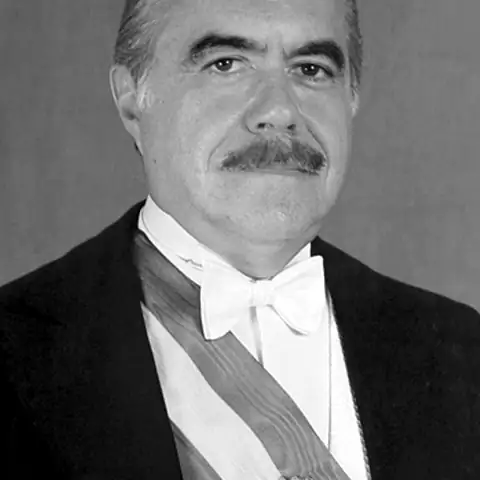
José Sarney
Retired figureBrazilBorn 1930

José Sarney

President of Brazil (1985-1990) · President of the Federal Senate (several terms between 1995 and 2013)

A Brazilian novelist and politician who led the country back to civilian government in 1985, summoned the assembly that drafted the 1988 Constitution and struggled with soaring inflation.

Profile on 12 axes7 of 12 documented
ECONOMYSTATESOCIETYWORLDOwnershipMarketsWelfareAuthoritySecurityStructureMoralityReligionTechnologyCultureTradeForeign
Where they stand

José Sarney, axis by axis

  1. PublicPrivate
  2. PlannedFree

    Mostly it reflects the price and wage freezes in the Cruzado, Bresser and Summer plans. Later finance ministers began a careful opening of the economy.

  3. SharedSelf-reliant
  4. DemocraticStrong leader

    He led the return to civilian rule and the Constituent Assembly, and allowed banned parties again. But he had spent two decades in the regime's party, and he used broadcast licenses as bargaining chips for a five-year term.

  5. LibertyOrder
  6. 06StructureNo clear record
    LocalCentral
  7. 07MoralityNo clear record
    ProgressiveTraditional

    There is no steady record of a stance on family or moral laws.

  8. 08ReligionNo clear record
    SecularReligious
  9. 09TechnologyNo clear record
    EmbraceCaution
  10. 10CultureNo clear record
    MulticulturalNational identity
  11. GlobalProtected

    He left the shielded computer industry and other import barriers in place while starting regional integration, which gives a mildly protectionist score.

  12. CooperationStrength

    It comes from his integration agreements with Argentina, early steps toward Mercosur, and from the renewed ties with Cuba.

5 axes have no clear record, so matching leaves them out.

Who is José Sarney?

Sarney was born José Ribamar Ferreira de Araújo Costa in the Maranhão town of Pinheiro. He entered Congress in the 1950s, first with the PSD, then the UDN, and from 1965 with ARENA, which backed the generals. He became governor of Maranhão, then a senator and chief of the ruling PDS. In 1984 he left the PDS, headed the Liberal Front and ran for vice president beside Tancredo Neves. Tancredo fell sick on the eve of the March 1985 swearing-in and died in April, so Sarney held the presidency until 1990. From 1991 he sat for Amapá in the Senate, which he led four times, until January 2015. He holds no elected post now and writes novels.

Political views

  • Called together the National Constituent Assembly, which produced the Constitution of 1988.Source: planalto.gov.br
  • Supported the 1985 amendment that brought back direct presidential elections and let people who could not read vote.Source: planalto.gov.br
  • The Cruzado Plan of 1986 swapped the currency and froze prices and wages in an attempt to beat inflation.Source: planalto.gov.br
  • In 1987 he stopped interest payments on foreign debt, calling the move a technical need after reserves ran dry.Source: www18.fgv.br
  • Together with Argentina's president Raúl Alfonsín he signed 1986 agreements pointing toward a shared regional market. He also reopened relations with Cuba.Source: www18.fgv.br
  • During the Constituent Assembly he fought to keep a presidential system and to win a five-year term for himself.Source: www18.fgv.br

Legacy

His defenders say Sarney managed a fragile handover to democracy and avoided a military reaction. They also credit him with legalizing parties, lifting censorship, summoning the constitutional assembly and starting the road to Mercosur. His critics call him a product of the old order. They say he traded more than a thousand broadcast licenses for votes on a five-year term, and that he left the country in hyperinflation, with prices rising roughly 2,750 percent in his last year. His long grip on Maranhão, among the poorest states, is a frequent example of family rule. In 2009 a scandal about secret administrative acts also dented his standing in the Senate.

How close are you to José Sarney?

Take the 12 Axes test and see which historical figure is your political twin, axis by axis.

Take the test

José Sarney: questions

How did José Sarney become president?

He ran as vice president with Tancredo Neves in the indirect election of 1985. Tancredo became ill before his inauguration and died soon after, which left Sarney in charge until 1990.

What was the Cruzado Plan?

It was a 1986 plan against inflation that swapped the currency and froze prices and wages. Critics say the freeze could not hold, and inflation returned.

Was José Sarney part of the military regime?

From 1965 he was in ARENA, the regime's party, and he later chaired its successor, the PDS. He split from it in 1984 to help lead the Liberal Front, which supported the civilian transition.

Sources

Portrait: Foto Oficial Sarney EBC.jpg by Unknown author, CC BY 3.0 br, via Wikimedia Commons. Cropped and converted to grayscale by 12axes-test.com.