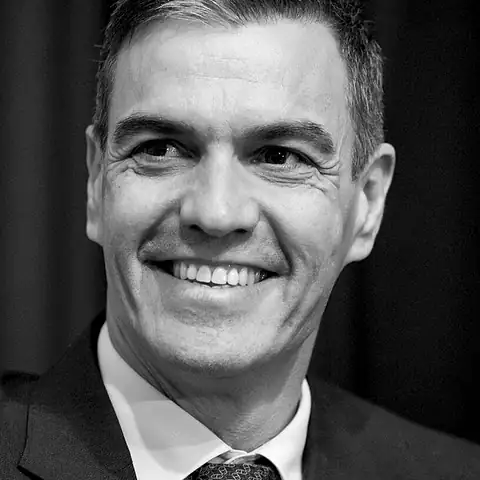
Who is Pedro Sánchez?
Pedro Sánchez was born in Madrid in 1972 and holds a doctorate in economics. He was a Madrid city councillor and a member of the Congress of Deputies, and was elected PSOE Secretary-General in 2014, resigned in 2016 and won the post back in 2017. In June 2018 he became Prime Minister after a no-confidence vote against Mariano Rajoy. He has led coalition governments since 2020, now with Sumar, and won a second investiture in November 2023 with support from Catalan and Basque parties. On 5 October 2026, after Congress rejected his housing decrees, he dissolved parliament and called a general election for 29 November 2026.
Previously: Secretary-General of the PSOE (since June 2017; also 2014-2016) · Leader of the Opposition (2014-2016) · Member of the Congress of Deputies for Madrid · Madrid city councillor (2004-2009)
Documented positions
- He agreed an amnesty for Catalan independence leaders in exchange for their votes in his 2023 investiture.Source: theguardian.com
- His government recognised a Palestinian state in May 2024.Source: euronews.com
- In September 2025 he announced a total arms embargo on Israel and called its attacks on Palestinians genocide.Source: english.elpais.com
- He refused NATO's target of spending 5 percent of GDP on defence, saying it would be incompatible with Spain's welfare state.Source: aljazeera.com
- In March 2026 he refused US use of joint bases for strikes on Iran and said no to the war after President Trump threatened to cut off trade with Spain.Source: opb.org
- His government opened a 2026 scheme offering one-year residence and work permits to undocumented migrants, drawing more than a million applications.Source: thelocal.es
- He proposed housing decrees with rent caps, a temporary eviction ban and limits on corporate home purchases, called an election when Congress rejected them and had his cabinet re-approve them.Source: timeslive.co.za
Record
Supporters credit Sánchez with strong economic growth, a labour reform followed by the lowest unemployment in almost two decades, the exhumation of Franco's remains and a rising share of renewable energy. Critics cite the Catalan amnesty, a fragmented parliament that has not passed a budget since 2023, the migrant crisis in Ceuta and corruption cases close to his party.
On 15 October 2026 the Central Electoral Board opened proceedings against him after a complaint from the People's Party over a press conference held at government premises. Most private polls before the November 2026 election showed the PSOE trailing the People's Party, while the state CIS survey put it ahead.
In their words
“And we have refused to sacrifice our welfare state on the altar of the 5% [defence spending target].”