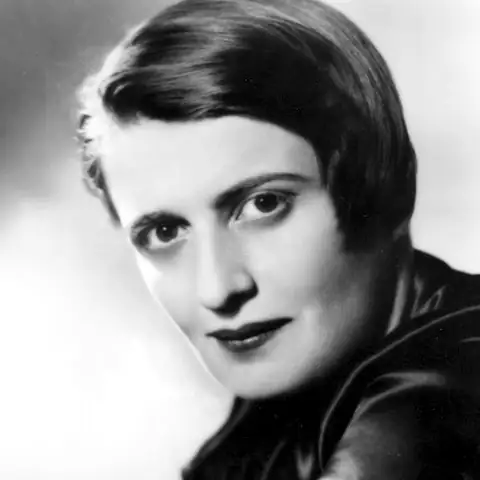
Who was Ayn Rand?
Ayn Rand was born Alisa Rosenbaum in St. Petersburg in 1905. The 1917 revolution upended her family, and in 1925 she left Soviet Russia for America and never went back. Her first novel, We the Living, drew on her years under communism. She won a mass audience with The Fountainhead and then Atlas Shrugged, stories about creators who refuse to bow to the crowd. She turned her ideas into a system she named Objectivism and spread them through essays, lectures and newsletters. She lived in New York for most of her later life and died there in 1982. Her politics rest on one rule: no one may use force against another.
Political views
- Said that laissez-faire capitalism is the only moral system, since it rests on voluntary exchange and treats each person as an end, not a tool.Source: plato.stanford.edu
- Wanted the economy and the state kept fully apart, in the same way that church and state are kept apart.Source: aynrand.org
- Held that a government should do one thing, protect individual rights, using police, courts and a military bound by clear law.Source: plato.stanford.edu
- Dismissed anarchism as unworkable because a society needs one objective legal system. Murray Rothbard and others disagreed.Source: plato.stanford.edu
- Opposed the military draft and any law that forces people to be good or to share, and she supported a woman's right to choose on abortion.Source: plato.stanford.edu
- Based rights on human nature and reason, not on God or on laws made by lawmakers, in line with her atheism.Source: aynrand.org
- Cast the trader and the warrior as opposites, and argued that true capitalism keeps physical force out of human dealings.Source: plato.stanford.edu
Legacy
Rand's novels have sold in the millions, and her ideas still shape libertarians, business founders and some conservative politicians. Fans praise her moral defence of capitalism and her respect for personal achievement. Many university philosophers think her arguments are thin. The left rejects her contempt for altruism, and many religious conservatives reject her atheism. She also broke with the libertarian movement that borrowed from her. Her work lives on through the Ayn Rand Institute and similar groups.
In their own words
“No man may initiate the use of physical force against others.”
“Rights are conditions of existence required by man's nature for his proper survival.”