12axes-testTake the test
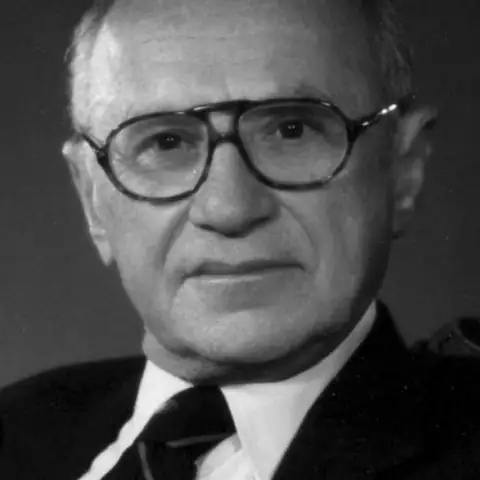
Milton Friedman
Historical figureUnited States1912-2006

Milton Friedman

Economist at the University of Chicago · Senior research fellow at the Hoover Institution

Nobel-winning American economist who led the Chicago school and argued for monetarism, free markets, floating currencies, school vouchers and a negative income tax.

Profile on 12 axesAll 12 documented
ECONOMYSTATESOCIETYWORLDOwnershipMarketsWelfareAuthoritySecurityStructureMoralityReligionTechnologyCultureTradeForeign
Where they stood

Milton Friedman, axis by axis

  1. PublicPrivate
  2. PlannedFree
  3. SharedSelf-reliant

    He proposed replacing many welfare programmes with a negative income tax. This guarantees a minimum income but makes the welfare state smaller, so the score is moderately self-reliant.

  4. DemocraticStrong leader
  5. LibertyOrder

    He fought the draft and argued openly for legalising drugs, so the score leans to civil liberties.

  6. LocalCentral
  7. ProgressiveTraditional

    In general he did not want the law used to impose personal morals, although social questions were not his main interest. The score is a judgment call.

  8. SecularReligious
  9. EmbraceCaution
  10. MulticulturalNational identity
  11. GlobalProtected
  12. CooperationStrength

    Apart from opposing conscription and favouring open trade and floating rates, he said little on foreign policy. The score sits near the middle.

Who was Milton Friedman?

Born in Brooklyn in 1912, Milton Friedman was the son of immigrants. After studying at Rutgers, Chicago and Columbia he spent three decades teaching at Chicago, then moved to the Hoover Institution. He led the Chicago school of monetary thought. His co-written A Monetary History of the United States, with Anna Schwartz, became a landmark. Capitalism and Freedom and the television series Free to Choose, both written with his wife Rose, took his arguments to a wide public. He was awarded the 1976 Nobel Prize in economics and died in 2006.

Political views

  • Argued that faster growth in the money supply pushes up prices over time without lifting output much, which is the central idea of monetarism.Source: econlib.org
  • Proposed in Capitalism and Freedom a negative income tax and education vouchers, as replacements for the welfare and school systems then in place.Source: econlib.org
  • Campaigned against conscription and served on the presidential commission that called for a volunteer force.Source: hoover.org
  • Wanted exchange rates set by the market, a position that came out of his 1950 work on European integration under the Marshall Plan.Source: nobelprize.org
  • Treated protecting and widening personal freedom as the thread running through all of his policy writing.Source: hoover.org
  • With Edmund Phelps, argued that jobless rates return to normal once workers adapt to higher inflation, undermining the trade-off economists had assumed.Source: econlib.org
  • Gave informal advice to presidential campaigns in 1964, 1968 and 1980, and always refused full-time posts in Washington.Source: nobelprize.org

Legacy

Friedman's ideas on money and markets shaped central banks and governments from the late 1970s onward, and Barry Goldwater, Richard Nixon and Ronald Reagan all drew on his counsel. Admirers say he showed how money feeds inflation and helped explain the Great Depression, and they credit him with school choice and the all-volunteer army. Critics say rigid targets for the money supply did not work well in practice. They also argue that deregulation and tax cuts, which he backed, helped widen inequality.

How close are you to Milton Friedman?

Take the 12 Axes test and see which historical figure is your political twin, axis by axis.

Take the test

Milton Friedman: questions

Was Milton Friedman a libertarian or a Republican?

He mostly sided with the Republicans and counselled their presidents and candidates. He described himself as a classical liberal, or libertarian, and took stands that the party mainly ignored, such as scrapping the draft and ending the ban on drugs.

What is monetarism, according to Friedman?

It is the belief that the amount of money in circulation is what mainly drives inflation, and that it also helps cause business cycles. Friedman wanted central banks to keep money growing at a steady, predictable rate.

How would Friedman's negative income tax work?

Below a set income level, people would receive a payment covering part of the shortfall rather than paying tax. He saw it as a simpler substitute for a tangle of separate welfare schemes.

Sources