12axes-testTake the test
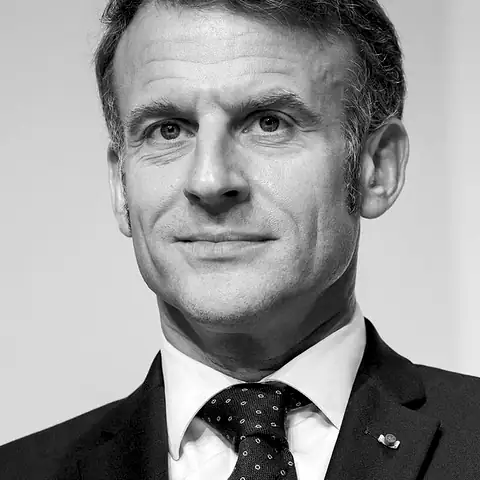
Emmanuel Macron
Current politicianFrance

Emmanuel Macron

President of France (since May 2017) · Renaissance

Emmanuel Macron is President of France, first elected in 2017 and re-elected in 2022, at the head of a centrist, pro-European political movement.

Positions as of 28 October 2026
Profile on 12 axes10 of 12 documented
ECONOMYSTATESOCIETYWORLDOwnershipMarketsWelfareAuthoritySecurityStructureMoralityReligionTechnologyCultureTradeForeign

Positions are taken from public statements, voting records and platforms as of 28 October 2026, and may have changed since. Report an inaccuracy.

Where they stand

The 12 axes, axis by axis

  1. 01Ownership+30
    PublicPrivate
  2. 02Markets+35
    PlannedFree
  3. 03Welfare+15
    SharedSelf-reliant

    Raised the pension age and loosened labour rules while keeping France's broad social insurance system; scored just right of centre.

  4. 04Authority-15
    DemocraticStrong leader

    Has governed through elections and parliament, but his governments passed the 2023 pension reform without a final Assembly vote using Article 49.3, a constitutional tool critics called undemocratic; scored slightly toward the democratic side.

  5. 05Security+30
    LibertyOrder
  6. 06StructureNo clear record
    LocalCentral
  7. 07Morality-45
    ProgressiveTraditional
  8. 08Religion-50
    SecularReligious

    Based on his defence of French secularism (laicite) and his plans to reorganise the financing of Islam and imam training in France.

  9. 09Technology-35
    EmbraceCaution
  10. 10Culture+10
    MulticulturalNational identity

    Backed the 2024 immigration law that tightened expulsions, while also supporting regularisation of workers in labour-short sectors; scored near the middle.

  11. 11TradeNo clear record
    GlobalProtected
  12. 12Foreign policy-15
    CooperationStrength

    Champions European defence and a multinational reassurance force for Ukraine, framed through alliances and the EU rather than unilateral action; scored slightly toward cooperation.

2 axes have no clear record: no documented statement, vote or platform places Emmanuel Macron there, so matching leaves them out.

Who is Emmanuel Macron?

Emmanuel Macron was born in Amiens in 1977. He studied at Sciences Po and the ENA civil service school, worked as an inspector of finances and as an investment banker, and served as President Francois Hollande's deputy chief of staff and then as economy minister from 2014 to 2016. He founded the En Marche movement in 2016 and won the presidency in 2017 at 39, and was re-elected against Marine Le Pen in 2022. After his camp lost ground in the June 2024 European elections he dissolved the National Assembly, producing a parliament without a majority. Sebastien Lecornu became his prime minister in September 2025 and was reappointed in October 2025 after briefly resigning. His second term ends in May 2027 and he cannot seek a third consecutive term.

Previously: Founder of En Marche, now Renaissance (2016) · Minister of the Economy, Industry and Digital Affairs (2014-2016) · Deputy Secretary-General of the Elysee Palace (2012-2014)

Documented positions

  • Signed decrees in 2017 that loosened French labour law, including limits on dismissal awards and more company-level bargaining.Source: hrreporter.com
  • Replaced the wealth tax with a narrower tax on real estate assets, a move left-wing critics said made him a president of the rich.Source: connexionfrance.com
  • Raised the legal retirement age from 62 to 64 in 2023, using Article 49.3 to pass the bill without a final Assembly vote.Source: cnbc.com
  • Pushed to write the freedom to have an abortion into the French constitution, approved by parliament 780 to 72 in March 2024.Source: opb.org
  • Announced plans in 2022 to build six new nuclear reactors and study eight more.Source: world-nuclear-news.org
  • Referred the 2024 immigration law to the Constitutional Council, which struck out more than a third of its articles, including limits on benefits and family reunification.Source: aljazeera.com
  • In September 2025 he announced that 26 countries had committed to a reassurance force for Ukraine once the war ends.Source: aljazeera.com
  • Has proposed reorganising the financing of Islam and the training of imams in France, framed as protecting national cohesion and secularism.Source: bridge.georgetown.edu

Record

Supporters credit Macron with labour market reform, a revival of nuclear power, the constitutional protection of abortion and a leading role in European support for Ukraine. Critics point to the pension reform passed without a final vote, the yellow vest protests of 2018 and 2019, the end of the wealth tax and the political deadlock that followed the 2024 dissolution, with several prime ministers in quick succession.

On 17 October 2026 nationwide protests over living costs and school conditions were followed by rioting and looting in several cities, with at least 2,400 arrests. Macron refused the resignation of Interior Minister Laurent Nunez and asked him for full transparency on planning and intelligence failures, while Prime Minister Lecornu ordered localised curfews.

How close are you to Emmanuel Macron?

Take the 12 Axes test and see which ideologies, historical figures and current politicians sit closest to your answers.

Take the test

Emmanuel Macron: questions

What party is Emmanuel Macron in?

Macron founded En Marche in 2016, which was renamed Renaissance. It is a centrist, pro-European party.

What are Emmanuel Macron's main policy positions?

He has pursued labour market and pension reform, ended the general wealth tax, relaunched nuclear power, backed a constitutional right to abortion and promoted European defence and support for Ukraine.

Can Macron run again in 2027?

No. The French constitution limits a president to two consecutive terms, and his second term ends in May 2027.

Sources

12axes-test.com is not affiliated with any politician or party. A profile summarises documented positions; it is not an endorsement.