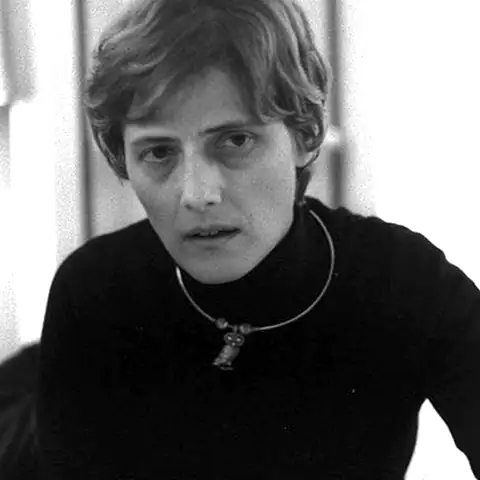
Who was Petra Kelly?
Petra Kelly was born Petra Lehmann in the Bavarian town of Günzburg and later used the surname of her American stepfather. In 1960 she went to the United States. Studying international politics at a Washington university, she took part in marches against the Vietnam War and racism. Next came a course in Amsterdam on European integration. She worked for the European Community in Brussels from 1972 to 1982, and she was active in the citizens' environmental movement alongside. Having left the SPD in 1979, she helped found the Greens and became one of their first spokespeople. She was a Bundestag member from 1983 until 1990. She died in 1992, shot by her partner Gert Bastian, who then took his own life.
Political views
- Helped found the Greens in 1979 and headed their list in the European Parliament elections.Source: hdg.de
- Backed nonviolent environmental, women's and peace movements on four continents.Source: hdg.de
- Marched in 1981 at a Bonn rally against nuclear weapons that drew roughly 400,000 people.Source: hdg.de
- Joined the sit-down blockades at Mutlangen in 1983 against the placing of nuclear missiles.Source: en.wikipedia.org
- Demonstrated in East Berlin's Alexanderplatz in 1983, so her protest was aimed at the East as well as the West.Source: hdg.de
- Persuaded every Bundestag group in 1987 to support her motion condemning human rights abuses in Tibet.Source: hdg.de
- Received recognition for tying environmental concerns to disarmament, social justice and human rights.Source: rightlivelihood.org
Legacy
To admirers, Kelly was the best-known face of the early Greens. They say she carried ecology, nonviolence and feminism into mainstream debate and linked West Germany's peace movement with dissidents in the East. The Right Livelihood Award of 1982 and her work for Tibet and Indigenous peoples gave her a worldwide name. At home, her party grew cold toward her. She complained of self-destructive infighting and lost her nomination in 1990. Fellow Greens criticised her for ignoring the rotation rule. The reasons for her death in 1992 remain uncertain, including whether she consented.