12axes-testTake the test
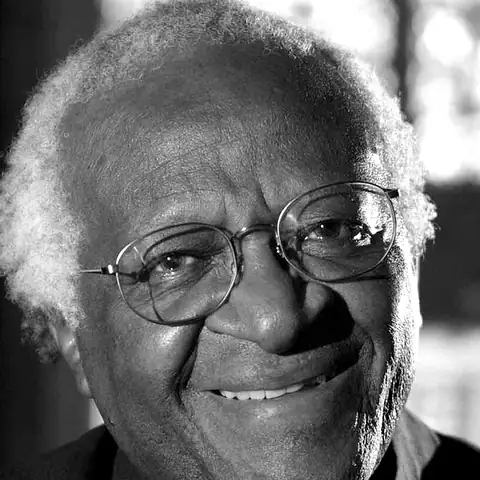
Desmond Tutu
Historical figureSouth Africa1931-2021

Desmond Tutu

Anglican Archbishop of Cape Town (1986-1996) · General Secretary of the South African Council of Churches (1978-1985)

South African Anglican archbishop who led the nonviolent church campaign against apartheid, received the 1984 Nobel Peace Prize and later chaired the Truth and Reconciliation Commission.

Profile on 12 axes9 of 12 documented
ECONOMYSTATESOCIETYWORLDOwnershipMarketsWelfareAuthoritySecurityStructureMoralityReligionTechnologyCultureTradeForeign
Where they stood

Desmond Tutu, axis by axis

  1. PublicPrivate

    He called himself a socialist and said capitalism brings out some of the worst traits in people, but he turned down Marxism-Leninism. He is scored moderately left.

  2. PlannedFree
  3. SharedSelf-reliant
  4. DemocraticStrong leader
  5. LibertyOrder

    He denounced jailing without trial and banning orders, and he opposed all violence, though he said he understood why some chose armed struggle.

  6. 06StructureNo clear record
    LocalCentral
  7. ProgressiveTraditional

    He fought for LGBT rights, backed women priests and supported legal assisted dying while staying a devoted Christian minister. He is scored progressive, though not at the extreme.

  8. SecularReligious

    He used the Bible to argue against apartheid and believed the church should speak on public questions, yet he defended equal rights for people of every faith. The score leans toward religion having a public voice.

  9. 09TechnologyNo clear record
    EmbraceCaution
  10. MulticulturalNational identity
  11. 11TradeNo clear record
    GlobalProtected

    He called for sanctions and boycotts to put moral pressure on governments, not as a view on trade, so the axis is left null.

  12. CooperationStrength

3 axes have no clear record, so matching leaves them out.

Who was Desmond Tutu?

Desmond Tutu was born in Klerksdorp, South Africa, in 1931. He first trained and worked as a teacher, then studied further in London and became an Anglican priest in 1960. He broke new ground in the church, as the first Black dean of Johannesburg's St Mary's Cathedral in 1975 and then the first Black leader of the South African Council of Churches in 1978. In 1984 came the Nobel Peace Prize. Two years later he was made Archbishop of Cape Town. When apartheid fell, Nelson Mandela asked him to head the truth commission. He kept criticising governments until he died in Cape Town in 2021.

Political views

  • His minimum demands were the same civil rights for every person, a single school system, scrapping the pass laws and stopping the forced moves of people to the homelands.Source: nobelprize.org
  • He called it a grave breach of human rights to jail people without trial or to ban them from public life.Source: nobelprize.org
  • He rejected violence of every kind, including armed struggle against apartheid, and described apartheid itself as the main violence.Source: nobelprize.org
  • He said the money spent on weapons would be better used to feed and teach the world's poor.Source: nobelprize.org
  • Leading the commission, he favoured restorative justice. The body looked into abuses between 1960 and 1994 and could grant amnesty.Source: en.wikipedia.org
  • He pressed for international sanctions on apartheid South Africa. In later years he spoke up for LGBT rights and legal assisted dying, and he was against the 2003 Iraq invasion.Source: en.wikipedia.org

Legacy

Many people honour Tutu as the moral voice of the fight against apartheid, and he made the 'Rainbow Nation' a popular picture of the new South Africa. Admirers say he kept nonviolent protest alive while leaders sat in prison or lived abroad, and that he steered the Truth and Reconciliation Commission with care. In the apartheid years, conservative white South Africans said he served communism, and they rejected sanctions, while some Black militants thought he was too gentle. Thabo Mbeki said the commission treated the ANC's armed struggle as criminal. Tutu, for his part, attacked ANC governments over their AIDS policy, corruption and herd loyalty. Alan Dershowitz and some Jewish groups charged him with antisemitism for comparing Israel to apartheid.

In their own words

“There can be no real peace and security until there be first justice enjoyed by all the inhabitants of that beautiful land.”
Nobel Peace Prize lecture, 11 December 1984

How close are you to Desmond Tutu?

Take the 12 Axes test and see which historical figure is your political twin, axis by axis.

Take the test

Desmond Tutu: questions

Did Desmond Tutu call himself a socialist?

He called himself a socialist and was sharply critical of capitalism. He did not accept Marxism-Leninism, partly because it is atheist.

Did Desmond Tutu support violence against apartheid?

No. He opposed violence of every sort, including armed struggle. He did say he understood why some people took up arms, and he called apartheid the main act of violence.

What did the Truth and Reconciliation Commission do?

It looked into human rights abuses in South Africa from 1960 to 1994 and heard from victims. Tutu chaired it. People who told the full truth about politically motivated crimes could be given amnesty.

Sources