Gun control
Who should be allowed to own a gun?
The gun debate is about how to balance personal freedom against public safety. One side sees gun ownership as a basic right, tied to self-defense, hunting, sport and the idea that citizens should not depend entirely on the state for protection. The other side sees firearms as a risk to public safety, and wants licensing, background checks, waiting periods or limits on certain weapons.
On the 12 Axes, the statement on self-defense moves security. Agreeing points toward the liberty end, because it favors individual choice over state restriction. Disagreeing points toward the order end, where safety is secured through tighter rules. The issue cuts across usual party lines in a few ways. Rural and urban voters often differ more than left and right do. Some on the left support gun ownership as a defense for minorities against violence, and some on the right back strict rules after tragedies. Attitudes also depend heavily on a country's history and on how common guns already are.
What each side argues
Right to own
- Supporters argue that law-abiding people have a right to defend themselves and their families.
- Supporters say criminals ignore gun laws, so restrictions mainly burden ordinary citizens.
- Supporters see an armed public as a check on abuse of power by the state.
Tighter controls
- Opponents argue that easier access to guns raises the risk of accidents, suicide and violent crime.
- Opponents say licensing and background checks are reasonable, much like rules for driving a car.
- Opponents hold that public safety must outweigh individual preference when the weapons are designed to kill.
The statement on gun control
- Law-abiding adults should have the right to own a gun for self-defense.Agreeing moves you toward Liberty
What politicians have said and done
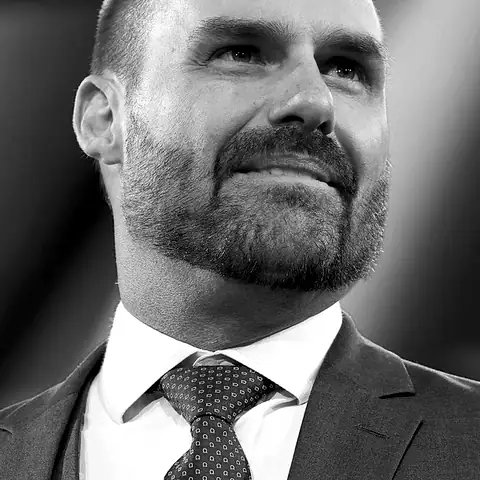 Eduardo BolsonaroWrote 15 firearms proposals, and in December 2020 filed a bill to allow firearm advertising nationwide, citing self-defence and the Bible.Source: metropoles.com
 Jair BolsonaroHis government's decrees raised the number of guns a person could own from two to four in 2019 and to six in 2021, and Lula revoked them on his first day in office.Source: jornalcontabil.com.br
- Jair BolsonaroThe same platform committed to preserving and expanding the right to self-defence, chiefly through legal means that give citizens access to guns.Source: jornaldebrasilia.com.br
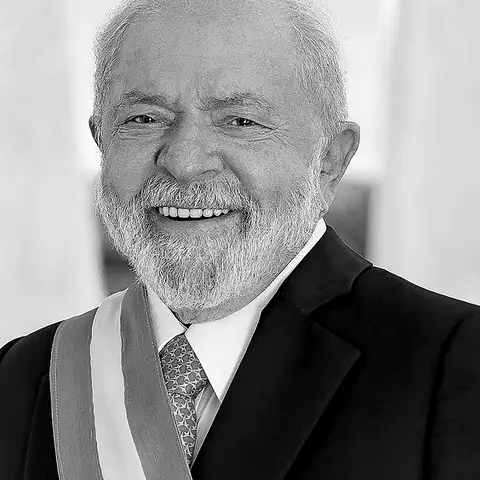 LulaHe proposes creating a Ministry of Public Security, putting body cameras on more police, and continuing arms control policies.Source: congressoemfoco.com.br
 Nikolas FerreiraHis first bill as a federal deputy, PL 456/2023, would ease citizens' access to buy, register and own firearms and ammunition.Source: em.com.br
 Ron DeSantisAdults may carry a concealed handgun with no permit under a 2023 law that he signed.Source: nbcnews.com
At each end of Security
People whose overall profile leans furthest each way on the axis this issue moves most. A lean on the axis is not a stance on this exact issue.






More security issues
Gun control: questions
Is gun control a left or right wing issue?
In many countries it lines up with the left favoring tighter rules and the right favoring ownership rights. But the split is often more about rural versus urban life and about national history than about economics or party.
What does gun control actually mean?
It covers a range of measures, such as background checks, licensing, waiting periods, storage rules, and limits on particular types of weapons or magazines. Some people want a few of these, some want all of them, and some want none.
Why do people disagree so strongly about guns?
Because the debate mixes safety, personal freedom and identity. People who see guns as tools for protection or tradition tend to resist limits. People who see them mainly as a danger tend to want strict rules. Both sides claim to protect lives.