Nationalisation and privatisation
What should the state own?
This debate is about which parts of the economy should belong to the public and which to private owners. Supporters of public ownership say that essential services such as energy, water and rail are natural monopolies or basic needs, so they should serve everyone and not be run for profit. Supporters of privatization say that private owners have a stronger reason to cut waste, invest and respond to customers, while governments run businesses badly and use them for political ends.
On the 12 Axes this issue sits squarely on the ownership axis. Wanting essential services and natural resources in public hands points toward the Public pole, while wanting to sell state businesses and trusting private firms to run services points toward the Private pole. The issue does not always split along party lines. Some conservatives defend public ownership of resources or key infrastructure for national interest, and some on the left accept regulated private operators when they deliver results. Experiences also differ by sector, so a person may favor public water but private airlines. The real question is often which model works best for each service, not a single principle.
What each side argues
Public ownership
- Supporters argue that essential services such as water and energy should serve everyone and not be run for profit.
- Supporters say natural resources belong to the whole nation, so their wealth should return to the public.
- Supporters believe public ownership gives citizens democratic control over services they depend on.
Privatize
- Opponents argue that private firms have a stronger incentive to cut waste, innovate and satisfy customers.
- Opponents say state-run businesses are often used for political ends and lose money that taxpayers must cover.
- Opponents believe selling state assets raises funds and lets the government focus on core tasks.
4 statements on nationalisation and privatisation
- Essential services such as energy and water should be publicly owned.Agreeing moves you toward Public
- Private companies run most services more efficiently than the government does.Agreeing moves you toward Private
- Natural resources such as oil, gas and minerals should be owned by the public.Agreeing moves you toward Public
- The government should sell the businesses it owns to private buyers.Agreeing moves you toward Private
What politicians have said and done
 Ciro NogueiraHe voted for the June 2021 provisional measure enabling the privatisation of Eletrobras, approved 42 to 37.Source: cartacapital.com.br
 Cláudio CastroIn April 2021 his government auctioned three of four Cedae water and sewage blocks for about R$22.7 billion, and he said the sale proved the state was doing its homework.Source: infomoney.com.br
 Eduardo LeiteThe state assembly approved the privatisation of CEEE, CRM and Sulgás in July 2019 by 40 votes to 14, and Leite called it a starting point.Source: estado.rs.gov.br
- Eduardo LeiteHe signed the sale of the water utility Corsan to the Aegea group in July 2023 for R$ 4.151 billion, and said the state would act as regulator.Source: estado.rs.gov.br
- Eduardo LeiteOn 30 March 2026 his government put privatisations and concessions in execution at about R$ 46.1 billion and announced about R$ 20.7 billion in new partnerships, including roads and a school PPP.Source: estado.rs.gov.br
- Eduardo LeiteIn August 2025 he argued that the state should regulate and oversee rather than run every project, and said the investment rate rose from 2.5 to 10 percent.Source: estado.rs.gov.br
 Fernando HaddadSaid in June 2026 that he would review Tarcísio's contracts, citing a "haze" over the Sabesp privatization and promising to revisit abusive clauses in free-flow toll contracts.Source: brasildefato.com.br
- Fernando HaddadWants stronger oversight of concessions and privatizations, with contracts monitored by government and society, and a public "Placar de Gestão" with goals updated every three months.Source: dgabc.com.br
- Flávio BolsonaroUnder his government plan, at least ten ministries would go, commissioned posts would shrink and the National Privatization Program would be revived.Source: acritica.net
 Geraldo AlckminIn 2022 he said infrastructure can be delivered by concessions or public-private partnerships, with the BNDES development bank backing PPPs through a guarantee fund.Source: moneytimes.com.br
- Geraldo AlckminOn taking office for a new term as governor in 2015 he said São Paulo had pioneered PPPs and used social organisations to run health and culture services that are 'public services, without necessarily being state-run'.Source: exame.com
 Jair BolsonaroThe Eletrobras capitalisation priced on 10 June 2022 raised about R$ 33.6 billion and cut the federal government's share of total capital to 37 percent, ending its control.Source: felsberg.com.br
 LulaHis plans use public banks and state companies as tools for investment, and include Petrobras going back into fuel distribution.Source: bpmoney.com.br
- Renan CalheirosHe voted against the June 2021 measure enabling the privatisation of Eletrobras, which passed 42 to 37.Source: cut.org.br
 Ricardo NunesHe sent the bill allowing the city to join the Sabesp privatisation; the City Council passed it on 2 May 2024 by 37 votes to 17, and he sanctioned it that day.Source: poder360.com.br
 Romeu ZemaAt Novo's July 2026 convention he said the aim is to privatise everything, with 'no sacred cows', and to revisit the pension reform and review social programmes.Source: opovo.com.br
- Romeu ZemaIn August 2026 he said he would privatise even the Correios and that the state should focus on security, health and education.Source: opovo.com.br
- Romeu ZemaIn November 2024 his government sent the Minas Gerais assembly two bills to privatise Cemig and Copasa.Source: brasildefato.com.br
 Rui CostaIn December 2018 his government announced an administrative reform cutting about 800 commissioned posts and asked the Assembly to authorise selling the fishing company Bahia Pesca.Source: bnews.com.br
 Sergio MoroDefended a gradual reduction of taxes, ruled out re-nationalizing the power company Copel and promised a "choque de gestão" at the utility Sanepar.Source: cnnbrasil.com.br
 Tabata AmaralIn May 2024 she called the Sabesp privatisation a mistake driven by the election year and said she would seek investment commitments for peripheral neighbourhoods.Source: brasildefato.com.br
 Tarcísio de FreitasWhile infrastructure minister, he oversaw 83 auctions that handed airports, roads, ports and railways to private operators.Source: cnnbrasil.com.br
- Tarcísio de FreitasIn 2024 his government privatised Sabesp by offering shares, and the state kept 18 percent.Source: ppi.sp.gov.br
 Avi LewisWould create postal banking, public telecom providers, a publicly owned maker of pharmaceuticals and a grocery option run by the public sector.Source: lewisisleader.ca
- Avi LewisWould set up a public builder with a five-year goal of one million homes, all of them social, co-op or non-profit, and impose a national limit on rent hikes.Source: lewisisleader.ca
- Andy BurnhamVowed to scrap the law that bars water companies from public ownership, with the sector moving to public control across a decade.Source: labour.org.uk
- Andy BurnhamUnveiled plans for taking VAT off household electricity bills and for a state-owned Great British Grid, to sit inside Great British Energy.Source: labour.org.uk
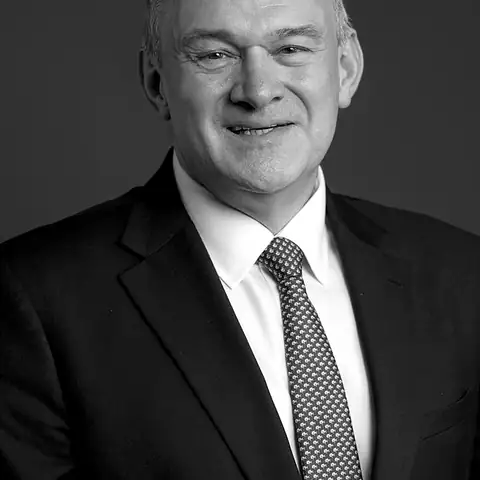 Ed DaveyOfwat would give way to a Clean Water Authority under his plan, and water firms that are failing would become public benefit corporations owned mutually.Source: libdems.org.uk
 Zack PolanskiWater companies should come under public control, in his view, and he wants a home insulation programme across the country.Source: greenparty.org.uk
- Zack PolanskiBuses should return to public control and be free for people under 22, he says.Source: greenparty.org.uk
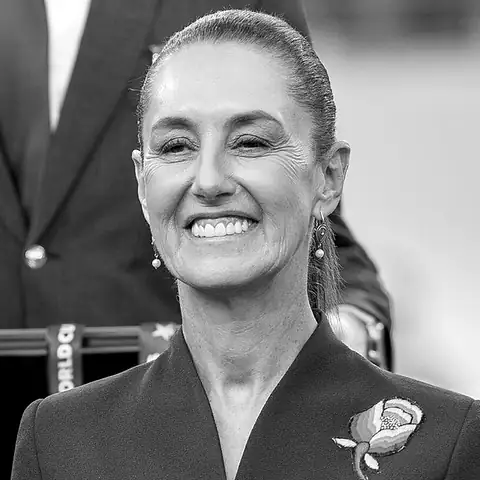 Claudia SheinbaumUnder her energy reform Pemex and the CFE became state-owned public companies, and the state is to keep a minimum 54 percent share of electricity generation.Source: dwfgroup.com
At each end of Ownership
People whose overall profile leans furthest each way on the axis this issue moves most. A lean on the axis is not a stance on this exact issue.

More ownership issues
Nationalisation and privatisation: questions
What is nationalization?
Nationalization is when the government takes ownership of a private company or industry, with or without paying the owners. Governments have done it to secure key services, rescue failing firms or control natural resources. Supporters see public benefit. Critics worry about efficiency, cost to taxpayers and political interference.
What is privatization?
Privatization is the sale or transfer of a state-owned business or service to private owners. Supporters say it improves efficiency and brings investment. Critics say it can leave essential services in the hands of firms that put profit first, with higher prices or weaker service for users.
Is public ownership left or right wing?
Support for public ownership is usually linked to the left, and privatization to the right. Yet some conservatives support state control of strategic industries or resources for national reasons. On the 12 Axes this issue is measured by the ownership axis, from Public to Private.