Courts and judicial review
Should judges be able to strike down laws?
Courts can be given the power to strike down laws that break constitutional rights. Supporters see this as a vital protection for individuals and minorities against majority overreach. Opponents say unelected judges should not overrule elected lawmakers on matters of public policy, and that big moral and political questions belong to voters. A related debate concerns international courts and whether a country must obey them when it disagrees.
On the 12 Axes, backing judicial review points toward the democratic end of authority, because it limits the power of any single majority or leader. Backing international court rulings moves the foreign axis toward cooperation, since it accepts outside rules over national choice. The issue cuts across left and right. Each side tends to praise courts when they deliver outcomes it likes and attack them as activist when they do not. A consistent view usually rests on how much trust one places in elected bodies versus independent judges.
What each side argues
Strong courts
- Supporters argue that courts protect basic rights even when majorities would prefer to ignore them.
- Supporters say independent judges are less swayed by short-term politics than elected officials.
- Supporters believe that international courts help hold all countries to common standards.
Elected lawmakers decide
- Opponents argue that unelected judges should not overrule laws made by elected lawmakers.
- Opponents say big moral and political questions should be decided by voters and their representatives.
- Opponents hold that following international courts reduces a country's ability to govern itself.
2 statements on courts and judicial review
- Courts should be able to cancel laws passed by elected lawmakers if those laws violate basic rights.Agreeing moves you toward Democratic
- A country should follow the rulings of international courts even when it disagrees with them.Agreeing moves you toward Cooperation
What politicians have said and done
 Eduardo BolsonaroCo-authored constitutional amendments to widen Congress's power to override or suspend Supreme Court decisions.Source: apublica.org
- Flávio BolsonaroWould restrict the effect of individual Supreme Court rulings and send criminal trials of senior officials down from that court to lower ones.Source: acritica.net
 Hugo MottaHe defended the PEC da Blindagem as a way to curb alleged Judiciary excesses, and said that if senators did not find it worthwhile, they should vote it down. The Senate later shelved it.Source: timesbrasil.com.br
 Romeu ZemaHis programme would end individual Supreme Court rulings, make impeachment of justices mandatory when a Senate majority backs it, abolish privileged forum and raise penalties for corruption.Source: poder360.com.br
 Sergio MoroSaid he signed an impeachment request against Justice Alexandre de Moraes and that he voted against Flávio Dino's Supreme Court nomination in the secret Senate ballot.Source: cnnbrasil.com.br
 Simone TebetSupported a fixed 12-year term for Supreme Court justices and said she wants a Senate majority able to pass constitutional changes.Source: portaltela.com
 Giorgia MeloniShe campaigned for a justice reform that would have split judges' careers from prosecutors'. A referendum in March 2026 saw voters reject it.Source: ansa.it
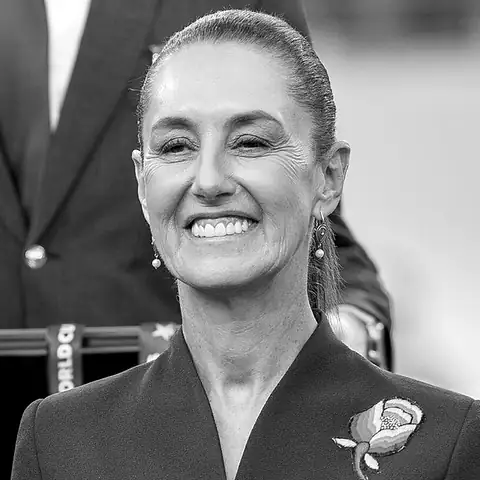 Claudia SheinbaumShe described the June 2025 judicial vote as a complete success even though turnout was 13 percent; it was the country's first election of judges by popular ballot.Source: aljazeera.com
At each end of Authority
People whose overall profile leans furthest each way on the axis this issue moves most. A lean on the axis is not a stance on this exact issue.







More authority issues
Courts and judicial review: questions
What is judicial review?
It is the power of courts to decide whether a law or government action breaks the constitution, and to strike it down if it does. Not all countries give courts this power, and those that do differ on how far it extends.
Why do some people say judges are undemocratic?
Because judges are usually appointed, not elected, and can overrule laws passed by representatives. Critics say this puts too much power in a few people. Defenders say that is exactly the point, since rights should not depend on a majority vote.
Should a country follow international court rulings?
People disagree. Supporters say shared rules only work if countries accept them even when they lose. Critics say outside courts weaken self-government and may not understand local needs. The answer often depends on how much a person values national sovereignty.