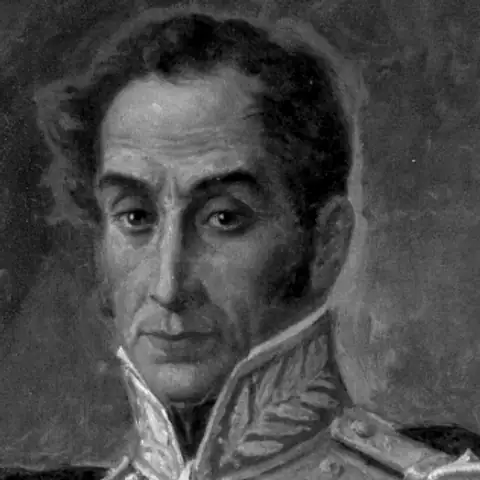
Who was Simón Bolívar?
Simón Bolívar came from a rich creole family in Caracas, and his outlook was shaped by Enlightenment books and time in Europe. From 1810 he fought for independence from Spain in Venezuela and New Granada. Wins such as Boyacá in 1819 and Carabobo in 1821 made him president of Gran Colombia. Along with Antonio José de Sucre, he then campaigned in Ecuador and Peru, and Spanish rule on the continent was over by 1825. Bolivia took his name. Revolts at home led him to take dictatorial powers in 1828. He resigned in 1830 and died the same year in Santa Marta.
Political views
- He wrote that the young republics should give up federal systems and concentrate power in the presidency.Source: es.wikisource.org
- He proposed a hereditary senate to steady the state and insisted it would not make a nobility.Source: es.wikisource.org
- For him, republican principles included the people's sovereignty, divided powers, civil liberty, and the end of both slavery and monarchy.Source: es.wikisource.org
- He described the idea of merging the New World into a single nation as 'grandiose', yet doubted that one government could work.Source: es.wikisource.org
- He hoped a congress of the American republics might one day meet on the Isthmus of Panama, and he worked toward it in 1826.Source: es.wikisource.org
- After receiving Haitian help in 1816, he declared slaves free if they joined the independence cause.Source: en.wikipedia.org
- His Decree of War to the Death in 1813 marked for death any Spaniard who did not support independence. He canceled it later.Source: en.wikipedia.org
Legacy
Much of South America honors Bolívar as El Libertador, and his name is on nations, money, plazas and political movements. His fans see the father of a continent of free republics and an early champion of Latin American unity. In his lifetime, opponents such as ex-vice president Francisco de Paula Santander, who split with him in 1827, warned that a lifelong presidency and government by decree endangered the republic. Historians also stress how brutal his wars were, how limited his steps against slavery stayed, and how quickly Gran Colombia fell apart after his death. Groups from conservatives to Venezuela's left claim him as their own.
In their own words
“The most perfect system of government is the one that produces the greatest possible happiness, the greatest social security and the greatest political stability.”