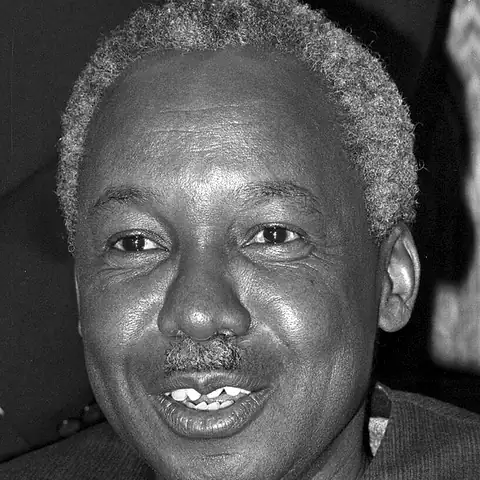
Who was Julius Nyerere?
Julius Nyerere, a chief's son from Butiama, trained as a teacher after studies at Makerere and Edinburgh. In 1954 he built TANU out of an older African association, and he steered Tanganyika to independence in 1961. A year later he was president, and the 1964 merger with Zanzibar made him head of Tanzania. TANU was the sole legal party under his rule. His government nationalized banks and big firms, then from 1973 moved millions of villagers by force. He gave up the presidency in 1985. Nyerere died in a London hospital in 1999. Tanzanians still call him Mwalimu.
Political views
- Argued that peasants and workers should own and control the main means of production and exchange, using the state and cooperatives.Source: marxists.org
- Insisted that a country develops through its people, its land, sound policy and leadership, and that cash and aid alone do not do the job.Source: marxists.org
- Wrote a code for leaders that banned shareholdings, directorships and rental property for those in the party and government.Source: marxists.org
- Championed Ujamaa villages based on shared work. After 1973 the idea became compulsory relocation of rural families.Source: en.wikipedia.org
- Accepted single-party government and a 1962 detention law that allowed jailing without trial, while conceding that it could be abused.Source: en.wikipedia.org
- Was a founder of the Organisation of African Unity and helped liberation movements fighting in Angola, Mozambique and South Africa.Source: sahistory.org.za
- In 1998 he cautioned against feeble African states and wanted strong, democratic ones with limited terms for leaders.Source: marxists.org
Legacy
Tanzanians honor Nyerere as the Father of the Nation, and many Africans see him as an anti-colonial figure who lived simply. Admirers say he built a stable, united country, widened access to schools and health care and backed the struggle against white rule. Critics say the single party and jailing without trial made his rule authoritarian. John Shao, an anthropologist, estimates that over seven million people were relocated in 1973-1975, with some four million more by late 1976, many unwillingly. Collective farms hurt harvests and left some regions needing food aid. After he left, his successor reversed much of his economic program. He later earned respect as a peace broker for Burundi.
In their own words
“Money, and the wealth it represents, is the result and not the basis of development.”