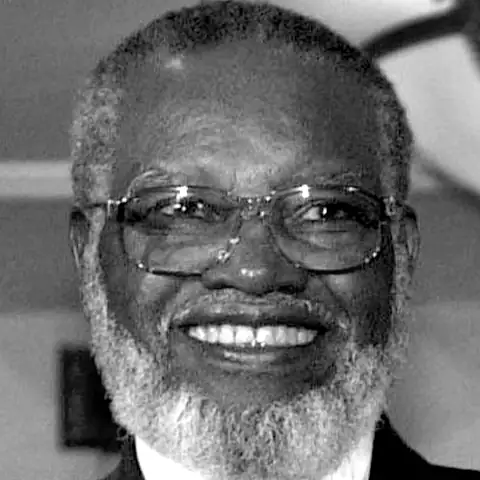
Who was Sam Nujoma?
Sam Nujoma was born in 1929 in what is now Omusati Region, worked for South African Railways and left in 1957 to enter politics. He led the Ovamboland People's Organisation, went into exile in 1960 and became president of SWAPO that year. He lobbied the United Nations and led the armed struggle, and in 1989 a ceasefire opened the way to elections. Parliament elected him Namibia's first president in 1990, and he served until 2005. He kept leading SWAPO until 2007. Namibia's parliament gave him the title Founding Father of the Namibian Nation in 2005. He died in 2025.
Political views
- Led the Ovamboland People's Organisation from 1959, which opposed contract labour and South African rule and wanted the territory under UN trusteeship.Source: samnujomafoundation.org
- Became SWAPO president in 1960 from exile and lobbied the United Nations, which recognized SWAPO in 1973.Source: namibian.com.na
- Adopted a policy of national reconciliation after 1990 under the motto One Namibia, One Nation, and formed a multi-racial cabinet that included opposition MPs as deputy ministers.Source: samnujomafoundation.org
- Crushed the 1999 Caprivi secessionist uprising, and many of those arrested were reportedly tortured.Source: namibian.com.na
- Won a 1998 constitutional change letting him run for a third term as founding president, which he won with 77 percent in 1999.Source: namibian.com.na
- Prompted a Cabinet ban on government advertising in The Namibian in 2001, which was lifted about a decade later.Source: namibian.com.na
- Public remarks from the mid-1990s often attacked homosexuals and Boers.Source: namibian.com.na
Legacy
Admirers honor Nujoma as the revolutionary who won Namibia's independence and then kept the peace through a policy of reconciliation, with a multi-racial cabinet. The press freedom group Namibia Media Trust called his legacy complex. Critics point to hundreds of SWAPO members who were detained and tortured in Angola in the 1980s on suspicion of being spies, and say SWAPO never acknowledged the victims. They also cite the torture reports after the 1999 Caprivi uprising, the third-term amendment, the advertising ban on a critical newspaper, the dismissal of senior rivals and his hostile remarks about gay people. The anti-corruption body was created only after he left office.