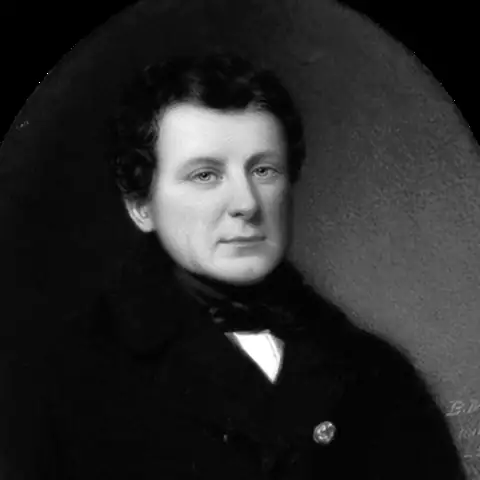
Who was Daniel O'Connell?
Daniel O'Connell was born in 1775 near Cahirciveen, County Kerry, into a Catholic landowning family. He became a successful barrister and in 1823 founded the Catholic Association with Richard Lalor Sheil, using low dues and the help of local clergy to bring ordinary Catholics into politics. His 1828 win in County Clare forced the government to grant Catholic emancipation in 1829. He then led a mass campaign to repeal the 1800 Act of Union. He was jailed briefly in 1844 and died in Genoa in 1847 on the way to Rome.
Political views
- Organized the Catholic Association with low membership dues so that ordinary Catholics could join, backed by the help of local clergy.Source: encyclopedia.com
- Won the 1828 County Clare election and so pressured the government into the 1829 act, which also abolished the vote of the forty-shilling freeholders.Source: encyclopedia.com
- Rejected violence and relied on peaceful mass pressure, saying he abhorred shedding one drop of blood.Source: drb.ie
- Called off the Clontarf meeting in October 1843 when the government banned it, to avoid bloodshed, during the campaign to repeal the Union.Source: encyclopedia.com
- Demanded immediate emancipation for enslaved people, argued that Black people were the equals of whites and condemned slavery in the United States.Source: irishamerica.com
- Endorsed the Chartist charter in 1838, but British radicals distrusted him for accepting the 1834 poor law and opposing trade unions.Source: encyclopedia.com
- As a Kerry landlord he defended property rights, and he accepted the decline of the Irish language on utilitarian grounds.Source: drb.ie
Legacy
Admirers see O'Connell as the founder of modern Irish democratic politics and a pioneer of mass nonviolent protest, and Frederick Douglass admired his attacks on slavery. Critics point to the 1829 settlement, which took the vote from poor freeholders, and to his opposition to trade unions and acceptance of the 1834 poor law. The Young Ireland movement broke with him in the 1840s, calling him too tied to the Whigs and unwilling to threaten armed resistance. Some, such as John Mitchel, blamed him for the Famine, which devastated Ireland in his final years.