12axes-testTake the test
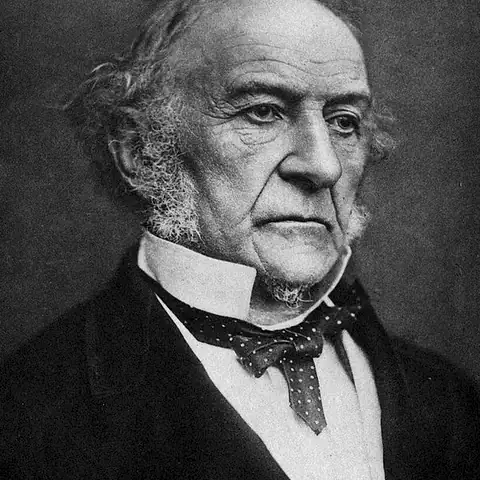
William Ewart Gladstone
Historical figureUnited Kingdom1809-1898

William Ewart Gladstone

Prime Minister of the United Kingdom (four times, 1868-1894) · Leader of the Liberal Party

Four-time Liberal Prime Minister who stood for free trade and frugal government, widened the vote and tried twice to give Ireland Home Rule.

Profile on 12 axes10 of 12 documented
ECONOMYSTATESOCIETYWORLDOwnershipMarketsWelfareAuthoritySecurityStructureMoralityReligionTechnologyCultureTradeForeign
Where they stood

William Ewart Gladstone, axis by axis

  1. PublicPrivate
  2. PlannedFree
  3. SharedSelf-reliant
  4. DemocraticStrong leader
  5. LibertyOrder

    He supported civil liberties in principle, but his ministries also enacted coercion measures for Ireland. The result is a balanced score.

  6. LocalCentral

    He twice proposed Home Rule, which would have given Ireland its own parliament, so he is scored toward local power.

  7. ProgressiveTraditional
  8. SecularReligious

    His Anglican faith was deep and shaped his politics, yet he disestablished the Church of Ireland. That makes him religious but not theocratic.

  9. 09TechnologyNo clear record
    EmbraceCaution

    No known view on modern technology debates, given the 19th-century setting, so this is left null.

  10. 10CultureNo clear record
    MulticulturalNational identity

    Nothing is recorded on immigration, and his sympathy for foreign national movements does not map neatly onto this axis, so it is null.

  11. GlobalProtected
  12. CooperationStrength

2 axes have no clear record, so matching leaves them out.

Who was William Ewart Gladstone?

Gladstone came from Liverpool, and in 1832 he entered Parliament as a Tory. His early politics were conservative, and he at first resisted the end of slavery. As a supporter of Robert Peel he moved to free trade when the Conservatives split in 1846. He held the Treasury several times and became Liberal leader in 1867. He was Prime Minister four times between 1868 and 1894. Victorian politics were dominated by his rivalry with Benjamin Disraeli. People knew him for marathon budget speeches, for denouncing Turkish atrocities in the Balkans and for his strong Christian faith. He left office for the last time at 84 and died in 1898.

Political views

  • Once he had embraced free trade in 1846, he would not serve in a Conservative cabinet that stood for protective tariffs.Source: gov.uk
  • His policies aimed to widen personal liberty by loosening political and economic controls.Source: gov.uk
  • Speaking in 1864, he argued that workers who were ready for the vote deserved it on moral grounds, though he warned against moving too fast.Source: gov.uk
  • The 1884 Representation of the People Act, passed under him, enfranchised many more men in the countryside.Source: gov.uk
  • He cut the Church of Ireland's link with the state and passed an Irish Land Act meant to curb landlord abuses.Source: gov.uk
  • In 1886 and 1893 he put Home Rule for Ireland before Parliament. MPs rejected the first bill, and the Lords killed the second.Source: api.parliament.uk

Legacy

Many ordinary voters, who nicknamed him the Grand Old Man, saw in Gladstone a moral leader for free trade, honest budgets, a wider franchise and fairness to Ireland. Critics at the time, including Queen Victoria, found him dangerously populist. The Sudan crisis, which ended with General Gordon's death, damaged his standing. Historians also note that he once defended his family's plantation interests. When Home Rule split off the Liberal Unionists, the break remade party politics for decades. His name is still tied to the Liberal tradition.

In their own words

“every man who is not presumably incapacitated by some consideration of personal unfitness or of political danger is morally entitled to come within the pale of the Constitution.”
Speech on the Borough Franchise Bill, House of Commons, 11 May 1864

How close are you to William Ewart Gladstone?

Take the 12 Axes test and see which historical figure is your political twin, axis by axis.

Take the test

William Ewart Gladstone: questions

Was Gladstone a Liberal or a Conservative?

Both, at different stages of his life. He began as a Tory, backed Peel after 1846, and finally led the Liberals as their Prime Minister four times.

What was Gladstone's Home Rule policy?

He came to think Ireland should manage its own domestic business through a parliament in Dublin. Both of his bills failed, and the first one split the Liberals.

Did Gladstone believe in free trade?

Yes. After 1846 he was a committed free trader, and as Chancellor he cut tariffs and kept public spending low.

Sources