12axes-testTake the test
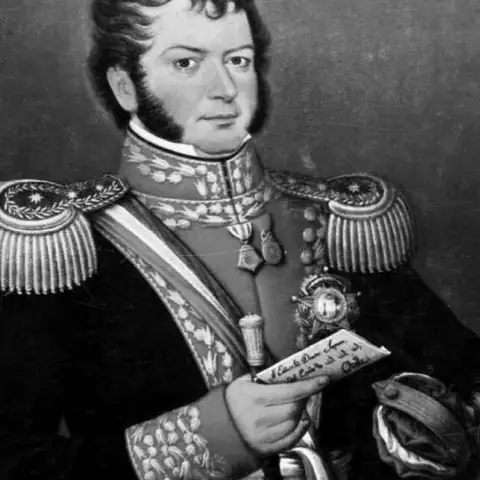
Bernardo O'Higgins
Historical figureChile1778-1842

Bernardo O'Higgins

Supreme Director of Chile (1817-1823) · Leader of the Chilean independence movement

Chilean general and first head of state of independent Chile, who won the battles of Chacabuco and Maipú, curbed noble titles and church privileges, ruled as supreme director and resigned in 1823 amid revolt.

Profile on 12 axes6 of 12 documented
ECONOMYSTATESOCIETYWORLDOwnershipMarketsWelfareAuthoritySecurityStructureMoralityReligionTechnologyCultureTradeForeign
Where they stood

Bernardo O'Higgins, axis by axis

  1. 01OwnershipNo clear record
    PublicPrivate
  2. 02MarketsNo clear record
    PlannedFree
  3. 03WelfareNo clear record
    SharedSelf-reliant
  4. DemocraticStrong leader

    He ruled by a minimal 1818 constitution with no popular elections and tried to extend his term in 1822. He also gave up power when revolts broke out, so the score is moderate.

  5. LibertyOrder

    He is blamed by critics for the execution of the Carrera brothers and ran a personal regime. The score is a judgment from limited detail.

  6. LocalCentral
  7. ProgressiveTraditional

    No record on family or gender questions, so this mild progressive score only reflects his liberal reforming outlook.

  8. SecularReligious

    He banned burial in churches and briefly exiled the bishop of Santiago, but Chile stayed a Catholic country under him.

  9. 09TechnologyNo clear record
    EmbraceCaution
  10. 10CultureNo clear record
    MulticulturalNational identity
  11. 11TradeNo clear record
    GlobalProtected
  12. CooperationStrength

    He backed a joint armed expedition to Peru with San Martín, but in alliance with others, so the score is near the middle.

6 axes have no clear record, so matching leaves them out.

Who was Bernardo O'Higgins?

Bernardo O'Higgins was born in Chillán in 1778, the son of Isabel Riquelme and the Irish-born colonial official Ambrosio Higgins. Educated in Lima and England, where he met Francisco de Miranda, he took up liberal and separatist ideas. He commanded patriot forces from 1814 and lost at Rancagua that October. He crossed the Andes, joined José de San Martín, and won at Chacabuco in February 1817, after which he was named supreme director of Chile. He declared independence in 1818, secured it at Maipú, and backed the expedition to Peru. He resigned in 1823 and died in exile in Lima in 1842.

Political views

  • In England he met Francisco de Miranda, whose ideas strongly shaped his views on independence.Source: encyclopedia.com
  • As supreme director he abolished noble titles and the public display of coats of arms.Source: encyclopedia.com
  • He banned burial in churches and temporarily exiled the bishop of Santiago, which set him against church privileges.Source: encyclopedia.com
  • His first constitution of 1818 was minimal and allowed no popular elections. A second, in October 1822, provided for elections and a congress but let him stay in office ten more years.Source: encyclopedia.com
  • He restored patriot institutions such as the Instituto Nacional and the National Library, and he completed an irrigation canal south of Santiago.Source: encyclopedia.com
  • Critics said his government was personal and cliquish, and they held against him the execution of the Carrera brothers.Source: encyclopedia.com
  • After revolts in the south and Coquimbo he resigned on 28 January 1823 without trying to keep power by force.Source: en.wikisource.org

Legacy

Chileans honor O'Higgins as a liberator and the first head of their state. Admirers credit him with the victories of Chacabuco and Maipú, with schools and a national library, and with abolishing noble titles. They also note that he left office instead of clinging to power. Critics say he ruled in a personal way under a constitution with no popular vote, tried to extend his own term, and made enemies by his treatment of the Carrera faction. Revolts and falling support forced him out in 1823. He never returned to Chile, though the government restored his rank before he died.

How close are you to Bernardo O'Higgins?

Take the 12 Axes test and see which historical figure is your political twin, axis by axis.

Take the test

Bernardo O'Higgins: questions

Who was Bernardo O'Higgins?

He was a Chilean soldier and statesman who helped win independence from Spain with San Martín. He served as supreme director of Chile from 1817 until he resigned in 1823.

Was Bernardo O'Higgins a dictator?

He held wide powers under a minimal 1818 constitution with no popular elections. He later accepted a charter with elections, but he was pushed out by revolts, and he did not hold on by force.

Sources