12axes-testTake the test
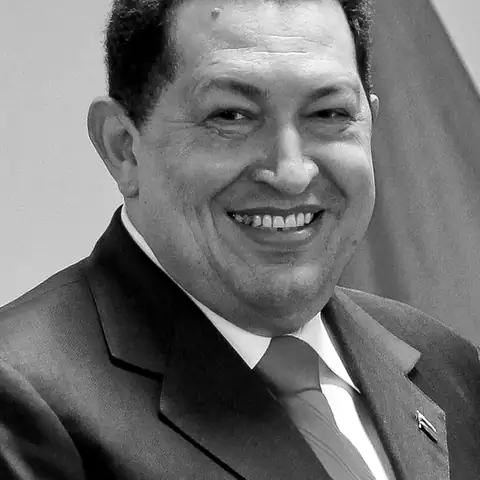
Hugo Chávez
Historical figureVenezuela1954-2013

Hugo Chávez

President of Venezuela (1999-2013) · Army officer and leader of the 1992 coup attempt

Venezuelan president for fourteen years. He led a self-styled Bolivarian revolution built on oil-funded social programs, nationalizations and growing presidential power, and he opposed US influence in Latin America.

Profile on 12 axes8 of 12 documented
ECONOMYSTATESOCIETYWORLDOwnershipMarketsWelfareAuthoritySecurityStructureMoralityReligionTechnologyCultureTradeForeign
Where they stood

Hugo Chávez, axis by axis

  1. PublicPrivate
  2. PlannedFree
  3. SharedSelf-reliant
  4. DemocraticStrong leader

    He won repeated elections and a recall referendum, yet gained rule by decree, rewrote the constitution to widen presidential powers and was accused of pressing media and rights groups. Leans toward a strong leader.

  5. LibertyOrder

    Critics say he cracked down on media and human rights groups.

  6. LocalCentral

    The 1999 constitution expanded presidential power, while communal councils were meant to push decisions to neighbourhoods. Leans central.

  7. 07MoralityNo clear record
    ProgressiveTraditional
  8. 08ReligionNo clear record
    SecularReligious
  9. 09TechnologyNo clear record
    EmbraceCaution
  10. 10CultureNo clear record
    MulticulturalNational identity
  11. GlobalProtected

    He presented ALBA as an alternative to free trade agreements and framed regional trade deals as a fight against US hegemony. Leans protected.

  12. CooperationStrength

    He opposed US wars and built regional bodies such as ALBA and UNASUR, which points to cooperation. He also backed confrontation with Washington and ties to Iran and Syria. Near neutral.

4 axes have no clear record, so matching leaves them out.

Who was Hugo Chávez?

Hugo Chávez was born in 1954 in Sabaneta, in Barinas, and became an army officer who helped found a secret movement inside the military. In 1992 he led a failed coup that left 18 people dead. President Caldera pardoned him in 1994, and Chávez won the presidency in December 1998 with 56 percent. He governed until his death. His government rewrote the constitution, nationalized parts of the oil industry and spent oil money on social programs. He won re-election in 2006 and again in 2012. He died of cancer in Caracas on 5 March 2013, aged 58.

Political views

  • After the failed 1992 coup, he turned to the ballot and won the presidency in December 1998 with 56 percent of the vote.Source: aljazeera.com
  • Promoted what he called Bolivarian Socialism and a socialist republic, and criticized capitalism.Source: aljazeera.com
  • Nationalized large parts of the private oil industry, and in 2007 announced state control of Orinoco oil projects and of key energy and telecom companies.Source: venezuelanalysis.com
  • Signed a 2005 land reform decree meant to break up large estates.Source: aljazeera.com
  • Spent oil revenue on literacy drives, schooling for the poor, neighborhood doctors and public housing. The World Bank reported that poverty fell 30 percent from 1995 to 2005.Source: aljazeera.com
  • Backed more than 30,000 communal councils to run their own neighborhoods, which supporters call participatory democracy.Source: venezuelanalysis.com
  • Rewrote the constitution to expand presidential powers and renamed the country the Bolivarian Republic of Venezuela. In December 2010 a congress he controlled gave him rule by decree for 18 months.Source: rferl.org
  • Helped found ALBA with Cuba and Bolivia, and also Petrocaribe and UNASUR, and opposed the US wars in Afghanistan and Iraq.Source: venezuelanalysis.com

Legacy

Supporters credit Chávez with cutting poverty and inequality and giving the poor a voice. Admirers also point to the missions in health and education. Critics say he took ever greater control of the state during fourteen years in power. He cracked down on media and human rights groups, and Human Rights Watch, Reporters Without Borders and the Inter-American Commission on Human Rights repeatedly condemned his government's record. Late in his rule Venezuela had food shortages, a deep recession, high crime and the highest inflation in Latin America, despite its oil wealth. The 2002 coup attempt against him also left a lasting split between his followers and opponents.

How close are you to Hugo Chávez?

Take the 12 Axes test and see which historical figure is your political twin, axis by axis.

Take the test

Hugo Chávez: questions

Was Hugo Chávez a socialist?

He called his project Bolivarian Socialism and described a socialist republic. His government nationalized oil assets, redistributed land and funded large social programs, while keeping elections and a mixed economy.

What were the Bolivarian missions?

They were social programs paid for with oil revenue. They covered literacy, schooling, neighborhood doctors and housing for poorer Venezuelans.

When did Hugo Chávez die?

He died of cancer in Caracas on 5 March 2013, aged 58. He had had four operations in Cuba after the cancer was found in mid-2011.

Sources

Portrait: Hugo Chávez in Brasília 2011 (3x4 cropped) (2).jpg by Roberto Stuckert Filho, CC BY-SA 2.0, via Wikimedia Commons. Cropped and converted to grayscale by 12axes-test.com.