12axes-testTake the test
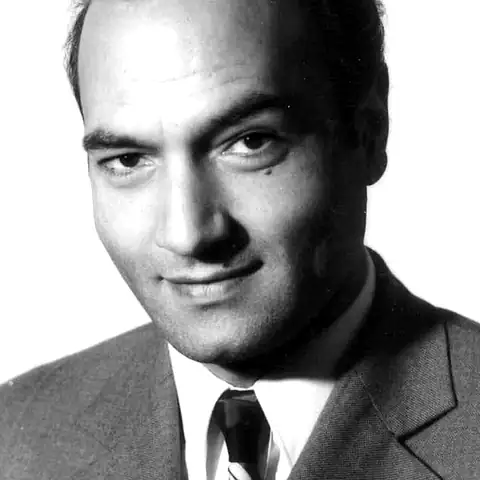
Ali Shariati
Historical figureIR1933-1977

Ali Shariati

Sociologist and writer · Lecturer at the Hosseiniyeh Ershad institute in Tehran

Iranian sociologist whose lectures recast Shia Islam as a call for social justice and resistance, influencing a generation of young Iranians before the 1979 revolution while sharply criticizing the clergy.

Profile on 12 axes6 of 12 documented
ECONOMYSTATESOCIETYWORLDOwnershipMarketsWelfareAuthoritySecurityStructureMoralityReligionTechnologyCultureTradeForeign
Where they stood

Ali Shariati, axis by axis

  1. PublicPrivate

    He drew on Fanon and the Paris left and said injustice grows from disunity in society.

  2. 02MarketsNo clear record
    PlannedFree
  3. SharedSelf-reliant

    Same weak basis as ownership; moderate lean toward shared provision.

  4. DemocraticStrong leader

    He opposed the Shah's police state, yet looked to a committed intellectual vanguard rather than clerics or parties.

  5. 05SecurityNo clear record
    LibertyOrder
  6. 06StructureNo clear record
    LocalCentral
  7. 07MoralityNo clear record
    ProgressiveTraditional
  8. SecularReligious

    He wanted Islam to guide social and political life and attacked Western-style secular intellectuals, but also criticized the clergy.

  9. 09TechnologyNo clear record
    EmbraceCaution
  10. MulticulturalNational identity

    He argued that religious cultural identity could help poor nations resist Western imperialism, and rejected both blind tradition and imitation of the West.

  11. 11TradeNo clear record
    GlobalProtected
  12. CooperationStrength

    Moderate lean to strength and sovereignty, from his stress on resisting Western imperialism.

6 axes have no clear record, so matching leaves them out.

Who was Ali Shariati?

Ali Shariati was born in 1933 in Mazinan, in eastern Iran, to a family of religious teachers. He studied at Mashhad and then at the Sorbonne from 1960, where he met the work of Massignon, Sartre, Camus and Frantz Fanon. He was jailed after returning to Iran in 1964. From 1965 his lectures at the Hosseiniyeh Ershad institute in Tehran drew large student crowds. The government closed it in 1973 and arrested him, and he was freed in 1975 under watch. He left for England in 1977 and was found dead in England in June.

Political views

  • Held that tawhid, the unity of God, is the central principle, and that injustice arises from a lack of unity in the individual and in society.Source: encyclopedia.com
  • Opposed taqlid, the blind imitation of tradition, and favored ijtihad, independent reasoning, citing the Quranic idea that people must change themselves.Source: encyclopedia.com
  • Argued that intellectuals, not the traditional clergy, should lead a return to Islam's original social message.Source: encyclopedia.com
  • Criticized clerics for treating Islam as general principles rather than applying it to concrete social problems, which led to open conflict with some of them.Source: encyclopedia.com
  • Argued that religious cultural identity could help poorer nations resist Western imperialism, while criticizing the existentialists for rejecting religion.Source: encyclopedia.com
  • Described himself as neither a reactionary against all change nor a Westernized intellectual who copied the West.Source: al-islam.org
  • Hoped committed young people would become fighters willing to give everything, including their lives, for their ideals.Source: al-islam.org

Legacy

Shariati is remembered by many Iranians as the thinker who made religion a language of protest and gave educated youth a way to be both modern and Muslim. Admirers credit him with inspiring the revolution of 1979. Critics note that the clergy who took power rejected his anticlericalism. His death in England at 43 is widely attributed to the secret police SAVAK, but no proof has been established. His ideas stayed influential long after the clergy took power.

How close are you to Ali Shariati?

Take the 12 Axes test and see which historical figure is your political twin, axis by axis.

Take the test

Ali Shariati: questions

Was Ali Shariati the ideologue of the Iranian Revolution?

Many describe him that way, because his lectures inspired young Iranians before 1979. But he died in 1977, and the clergy who took power rejected his criticism of their role.

What did Ali Shariati think of the clergy?

He argued that intellectuals, not the traditional clergy, should lead the revival of Islam's social message. Some clerics, including Ayatollah Motahari, broke with his institute over it.

How did Ali Shariati die?

He was found dead in England in June 1977, a few weeks after leaving Iran. Supporters blame the secret police SAVAK, but no conclusive proof has been presented.

Sources