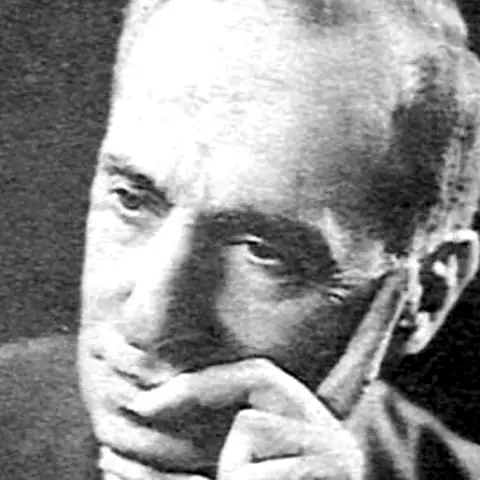
Who was Michel Aflaq?
Michel Aflaq, born in Damascus, is regarded with Salah al-Din al-Bitar as a father of the Ba'ath movement. His ideas inspired the founding congress of the party, held in Damascus in 1947. He argued that the Arab states were parts of one nation and that unity, freedom and socialism belonged together. His civilian old guard favored a gradual, moderate path to socialization. A schism in 1966 split the party into rival commands in Damascus and Baghdad, and Aflaq later served as secretary general of the Baghdad wing. He died in 1989.
Political views
- Held that the separate Arab states were regions of a single Arab nation, so success in one region should advance a unified Arab state.Source: countrystudies.us
- His ideas inspired the founding congress of the Ba'ath Party in Damascus in 1947, and he is counted with Salah al-Din al-Bitar as a father of the movement.Source: countrystudies.us
- The party's core principles were unity, freedom and socialism.Source: countrystudies.us
- As a leader of the old-guard civilian wing, he put Arab union first and backed a moderate, gradual approach to nationalization and land reform.Source: countrystudies.us
- His wing viewed an exclusive Soviet sphere of influence as a new form of imperialism, in contrast to the party's leftist faction.Source: countrystudies.us
- In February 1964 the old guard and officers expelled the party's Marxist faction from its commands.Source: countrystudies.us
- He later served as secretary general of the Baghdad-based National Command, with Saddam Husayn as vice-chairman, after a 1966 schism split the party.Source: countrystudies.us
Legacy
Admirers see Aflaq as the thinker who gave Arab nationalism a modern program and who linked unity with freedom and social reform. Critics note that the party he inspired produced ruling regimes in Syria and Iraq that arrested party members and, in Iraq in 1979, executed senior Ba'athists over alleged coup plotting. The party split in 1966 into rival Damascus and Baghdad commands, and Aflaq ended up as secretary general of the Baghdad wing under Saddam Husayn as vice-chairman. Whether Ba'athist rule betrayed his ideas or followed from them remains argued among historians.