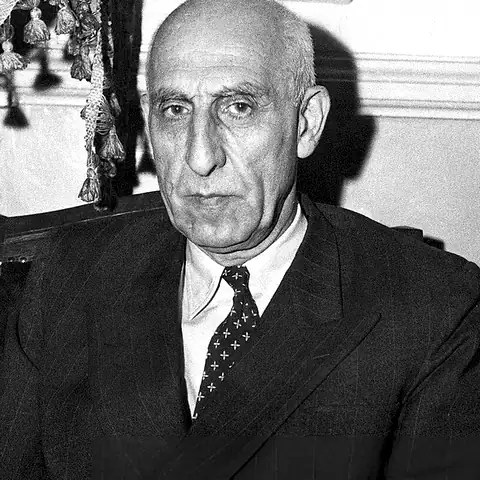
Who was Mohammad Mosaddegh?
Mohammad Mosaddegh, an Iranian parliamentarian, chaired the Majlis oil committee in 1950 and led the National Front. After the Majlis voted on 15 March 1951 to nationalize the oil industry, the Shah named him prime minister in April. Britain answered with an asset freeze, an export ban and a case at the International Court of Justice. In 1952 he resigned over control of the armed forces and was restored after riots. A coup planned by the CIA with British intelligence removed him on 19 August 1953. He was sentenced to three years in prison and then stayed under house arrest until he died in 1967.
Political views
- In November 1950 a Majlis oil committee he led rejected an Anglo-Iranian Oil Company draft that lacked fifty-fifty profit sharing.Source: countrystudies.us
- On 15 March 1951 the Majlis voted to nationalize the oil industry, and in April the Shah named him prime minister under pressure from parliament and the street.Source: countrystudies.us
- Britain froze Iran's sterling assets and banned exports to Iran, and took the dispute to the International Court of Justice, which ruled in Iran's favor.Source: countrystudies.us
- In summer 1952 he demanded the post of war minister, which would have given him control of the armed forces. When the Shah refused he resigned, and after three days of rioting he was reappointed.Source: countrystudies.us
- In August 1952 the Majlis granted him full powers over government affairs for six months, later extended, and he cut the Senate's term from six years to two, effectively ending that body.Source: countrystudies.us
- On 3 August 1953 he held a plebiscite to dissolve the Majlis, reported a large majority in favor, and dissolved it.Source: countrystudies.us
- The Truman administration saw him as the best barrier to a communist takeover, while the Eisenhower administration viewed him as a liability.Source: nsarchive2.gwu.edu
Legacy
Many Iranians honor Mosaddegh as a defender of national sovereignty and a rare leader chosen by parliament who stood up to a foreign oil company. His overthrow on 19 August 1953, planned by the CIA with British intelligence, ended his government, and about 200 people were reportedly killed in fighting near his home. His foreign minister was executed. Critics argue that he governed more and more by emergency powers, cut the Senate and dissolved parliament by plebiscite, and that the loss of his base in the Majlis weakened him before the coup. The coup fed anti-American feeling that shaped the 1979 revolution.