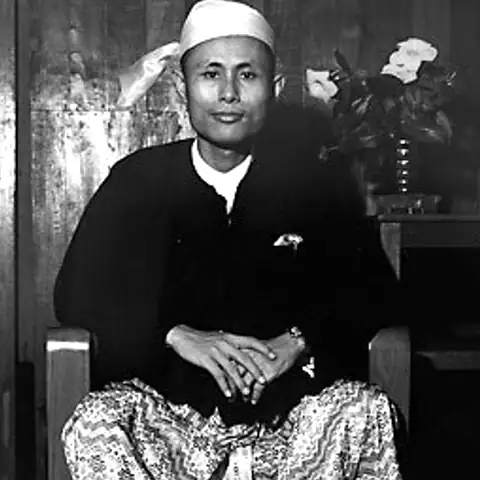
Who was Aung San?
Aung San rose through student unions and the Dobama Asiayone nationalist movement. In 1941 he left for Japan with the Thirty Comrades for military training, and with Japanese backing he built the Burma Independence Army. He served as War Minister in 1943, grew suspicious of Japan's promises, and on 27 March 1945 led his army against the Japanese. After the war he became president of the Anti-Fascist People's Freedom League. He signed an independence agreement with Prime Minister Attlee in January 1947 and the Panglong Agreement a month later. He was shot dead on 19 July 1947.
Political views
- Helped found the Communist Party of Burma and worked with socialists.Source: newworldencyclopedia.org
- Accepted Japanese help to raise the Burma Independence Army in 1942, then called Japan's promised independence a sham.Source: encyclopedia.com
- Led the army in open revolt against Japan in March 1945 and cooperated with the returning British forces.Source: encyclopedia.com
- Pressed Britain for complete independence rather than dominion status, and said Burma was ready for violent or non-violent struggle.Source: newworldencyclopedia.org
- Signed the Panglong Agreement on 12 February 1947 with leaders of other national groups, supporting a united Burma that included frontier peoples.Source: newworldencyclopedia.org
- Led the League to 196 of 202 seats in the April 1947 constituent assembly election.Source: newworldencyclopedia.org
- Was killed on 19 July 1947 with six ministers. His rival U Saw was blamed, tried and hanged, though doubts remain about the trial.Source: newworldencyclopedia.org
Legacy
Burmese regard Aung San as the father of independence, and his death date is kept as Martyrs Day, the most solemn national holiday. Admirers credit him with uniting rival nationalists and with seeking agreement with the hill peoples at Panglong. Critics note that he first built his army with Japanese help and served as a minister under a Japanese-backed government, and that his early death left the promises of Panglong unfinished. Doubts remain about the trial of U Saw, with rumors of British involvement. After his death, Burma became independent in January 1948 under U Nu.