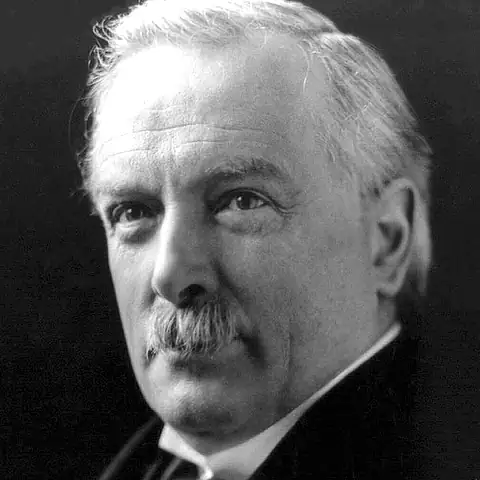
Who was David Lloyd George?
Born in Manchester in 1863, David Lloyd George grew up in a Welsh village, raised by his mother and a shoemaker uncle. He trained as a solicitor and won a seat in Parliament for the Liberals in 1890. Early on he fought for Welsh causes and land reform, and he spoke out against the Boer War. He joined the cabinet in 1905 and became Chancellor of the Exchequer three years later. In the First World War he ran munitions and then replaced Asquith as Prime Minister in December 1916. He stayed in office until 1922 and was a leading figure at the Versailles peace talks. Welsh was his first language.
Political views
- His 1909 People's Budget raised taxes on wealth and land. He called it a war budget against poverty.Source: library.wales
- In 1908 he steered the first state old age pensions through the Commons.Source: biography.wales
- His 1911 National Insurance Act set up compulsory health and unemployment cover for workers.Source: biography.wales
- He said in the 1909 budget speech that leaving so many people poor through illness, age and joblessness was neither fair nor safe.Source: api.parliament.uk
- He criticized how Britain fought the South African War between 1899 and 1902.Source: biography.wales
- In 1911 he warned Germany that Britain would not stand aside over its aggression in Morocco.Source: biography.wales
- After the war he reluctantly accepted independence for most of Ireland.Source: gov.uk
Legacy
Supporters see Lloyd George as a father of the British welfare state and an energetic war leader, called in his day the man who won the war. Critics point to the claims that titles were sold for cash under his government, the harsh policing of Ireland by his coalition, and the damage he did to the Liberal Party, which never again governed alone after 1922. His 1936 meeting with Hitler was also criticized later. Most historians agree that he changed how Britain thinks about the state's duty to look after its people.
In their own words
“Is it fair, is it just, is it humane, is it honourable, is it safe to subject such a multitude of our poor fellow-countrymen and countrywomen to continued endurance of these miseries”