12axes-testTake the test
James Callaghan
Historical figureUnited Kingdom1912-2005

James Callaghan

Prime Minister of the United Kingdom (1976-1979) · Leader of the Labour Party (1976-1980)

Callaghan led Labour and Britain from 1976 to 1979 and is the only person to hold all four top cabinet posts. His term saw the IMF loan and the Winter of Discontent.

Profile on 12 axes11 of 12 documented
ECONOMYSTATESOCIETYWORLDOwnershipMarketsWelfareAuthoritySecurityStructureMoralityReligionTechnologyCultureTradeForeign
Where they stood

James Callaghan, axis by axis

  1. PublicPrivate
  2. PlannedFree

    He stood up for the tie between Labour and the unions. Yet in 1976 he warned his party that spending could not cure a slump any more, which many view as a break with Keynesian ideas. He scores as moderately interventionist.

  3. SharedSelf-reliant
  4. DemocraticStrong leader
  5. LibertyOrder
  6. LocalCentral

    Devolution bills for Scotland and Wales were passed under him and put to votes in 1979, but neither vote reached the required level. The score leans slightly local.

  7. ProgressiveTraditional
  8. SecularReligious

    He was raised a Baptist and taught Sunday school, and the Nonconformist outlook shaped him. How far he kept the faith later is debated, so the score is only mild.

  9. 09TechnologyNo clear record
    EmbraceCaution
  10. MulticulturalNational identity

    As Home Secretary he introduced the Commonwealth Immigrants Act 1968, limiting entry for Kenyan Asians who held British passports. Later, as Prime Minister, he oversaw a new Race Relations Act in 1976. The score is mixed.

  11. GlobalProtected
  12. CooperationStrength

    He strongly backed NATO and Britain's nuclear deterrent. As Foreign Secretary he also used the United Nations. The score is balanced.

One axis has no clear record, so matching leaves it out.

Who was James Callaghan?

Callaghan's story starts in Portsmouth, where he was born in 1912 into a poor family. He could not afford university, so he took a job in the tax service and became a union official. After navy service in the war, he was elected for Cardiff South in 1945. His later posts were Chancellor, Home Secretary and Foreign Secretary, three of the four great offices of state. He quit as Chancellor in 1967 after the pound was devalued. When Harold Wilson stood down in 1976, Callaghan became Labour leader and Prime Minister. His government had no safe majority and leaned on smaller parties. Strikes in 1978-1979 weakened him further. He then lost a confidence vote by a single vote, 311 to 310, and Labour lost the election that followed. He died in 2005, having entered the Lords in 1987.

Political views

  • In 1976 he asked the IMF for a loan. The terms meant cuts in public spending, though he talked the lenders down from the larger cuts they first wanted.Source: gov.uk
  • In 1969 he led cabinet resistance to the In Place of Strife plan to change trade union law.Source: en.wikipedia.org
  • As Home Secretary in 1969 he decided to send British troops onto the streets of Northern Ireland.Source: en.wikipedia.org
  • His 1976 speech at Ruskin College began a national argument about school standards and the case for a core curriculum.Source: education-uk.org
  • He tried to keep inflation down by capping pay in the public sector. That led to the strikes of the Winter of Discontent.Source: gov.uk
  • His government passed the Race Relations Act 1976. It also passed a law that made councils responsible for housing homeless people.Source: gov.uk

Legacy

Admirers describe a calm, well-liked leader who kept a divided cabinet together during the IMF crisis and led a minority government for its three years in power. Critics on the left argue that the IMF cuts, and the speech he gave at the 1976 conference, abandoned the goal of full employment. Critics on the right hold him responsible for high inflation and for letting the unions grow too strong. His role in the 1968 immigration law is still disputed. The Winter of Discontent has stuck in the national memory and helped Thatcher into power.

In their own words

“I am concerned on my journeys to find complaints from industry that new recruits from the schools sometimes do not have the basic tools to do the job that is required.”
Speech at Ruskin College, Oxford, 18 October 1976

How close are you to James Callaghan?

Take the 12 Axes test and see which historical figure is your political twin, axis by axis.

Take the test

James Callaghan: questions

Was James Callaghan left or right?

He was on the moderate wing of the Labour Party. He backed unions and public services, yet he also accepted IMF spending cuts and told his party that spending alone could not end a recession.

What happened in the Winter of Discontent?

Many public sector workers went on strike in 1978-1979 to protest limits on pay rises. The disruption hurt Labour badly and helped Margaret Thatcher win the 1979 election.

Sources

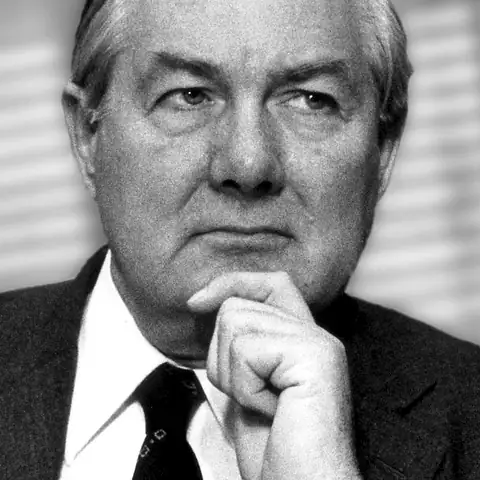
Portrait: James Callaghan (1975).jpg by Christian Lambiotte, CC BY 4.0, via Wikimedia Commons. Cropped and converted to grayscale by 12axes-test.com.