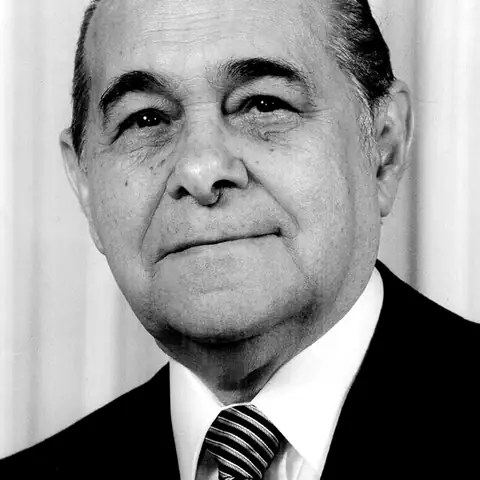
Who was Tancredo Neves?
Tancredo de Almeida Neves trained as a lawyer and came from São João del Rei, in Minas Gerais. He started in politics in the 1930s as a member of the Social Democratic Party, the PSD. Getúlio Vargas made him justice minister in 1953-1954. In 1961 Congress switched to a parliamentary system so that João Goulart could take power, and Neves became the first prime minister. During the military regime he joined the legal opposition in the MDB, created the Popular Party in 1979 and later brought it into the PMDB. He was elected governor of Minas Gerais in 1982. In January 1985 the Electoral College picked him as president. He fell ill the night before taking office and died on 21 April 1985.
Political views
- Took the 1961 parliamentary amendment as a negotiated exit from the dispute over Goulart's right to succeed, and headed the first cabinet under it.Source: planalto.gov.br
- Fought the military regime through the legal opposition and preferred slow change to open confrontation.Source: www18.fgv.br
- Saw national reconciliation as the best route from military to civilian government.Source: www18.fgv.br
- Backed the 1984 Diretas Já campaign for direct elections, then formed the Democratic Alliance with defectors from the regime's party.Source: www18.fgv.br
- Promised to call a constituent assembly to replace the legal framework left by the military.Source: www18.fgv.br
- Warned that long recession and high inflation would hurt industry and farming, and asked for policies that favour growth.Source: www18.fgv.br
Legacy
Brazilians often see Tancredo Neves as the face of the return to civilian rule, and the public grieved massively when he fell ill and died. Admirers value his talent for bringing opposition figures and former backers of the regime to the same table, which helped end 21 years of military rule without bloodshed. Critics, mostly on the left, say that winning through an indirect Electoral College and allying with ex-regime politicians kept the old order in place and put off a clean break. Since he never held the office of president, his record is judged by his long career in parliament.
In their own words
“It would have to be a center-left PSD, a party attuned to social realities, with a more pronounced social-democratic character, in search of social justice, without radicalism and without ideological commitments.”