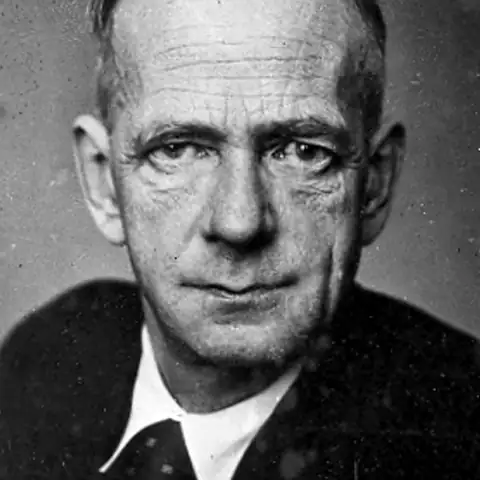
Who was Kurt Schumacher?
Kurt Schumacher was born in Culm, West Prussia, in 1895. He gave up an arm in the 1914-18 war and became an SPD member in 1918. After working as an editor in Stuttgart, he sat in the Reichstag from 1930. When the Nazis took power and banned his party in 1933, he was arrested and spent about ten years in camps, among them Dachau and Flossenbürg. In 1945 he started rebuilding the SPD in the western zones from Hanover, and in 1946 he became its chairman. In the first Bundestag he was the opposition leader. He died in 1952, four years after an illness cost him a leg.
Political views
- In a 1932 Reichstag speech he described Nazi agitation as a steady appeal to the beast inside people.Source: hdg.de
- He fought the forced merger of the SPD and KPD into the SED and ruled out working with the communists.Source: hdg.de
- He wanted a united socialist Germany and state ownership of heavy industry. He blamed its owners for bankrolling the Nazis.Source: en.wikipedia.org
- For the new constitution he asked for legal and economic unity, a strong federal tax base and similar living standards everywhere.Source: hdg.de
- He won a say for workers in running the coal and steel industries.Source: hdg.de
- Over the 1949 Petersberg Agreement he accused Adenauer of being the 'Chancellor of the Allies'.Source: hdg.de
- He led the SPD in rejecting West German membership of three bodies: the Council of Europe, the Coal and Steel Community and a planned European Defence Community.Source: hdg.de
Legacy
Admirers see Schumacher as an emblem of democratic resistance to the Nazis. They say his refusal to join forces with the communists kept an independent social democratic movement alive in the West. His push for a stronger national government also left a mark on the Basic Law. Critics, some of them later SPD leaders, say his sharp tone and his resistance to Western and European ties left the party isolated, while Adenauer won back sovereignty and brought prosperity. Willy Brandt called him a party leader of special stature who lacked a proper feel for Europe and the wider world. In 1959 the Godesberg Program moved the SPD away from his positions.