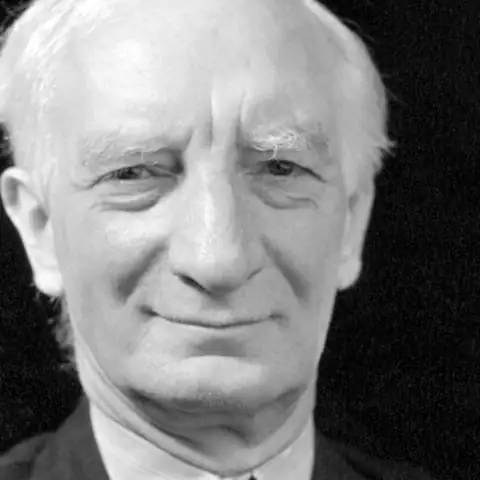
Who was William Beveridge?
William Beveridge was born in Bengal in 1879. His father served there as a judge. At Oxford he read at Balliol, and after qualifying in law he found his calling in social reform through Toynbee Hall in London. In the years before 1914 he advised the Liberal government and helped build labour exchanges and the first national insurance. From 1919 to 1937 he directed the LSE, and after that he headed University College, Oxford. A wartime committee on social services was handed to him in 1941. Its report, published in December 1942, became a bestseller. He was elected a Liberal MP in 1944, lost in 1945, and moved to the Lords in 1946. Attlee's government built much of the welfare state on what he proposed.
Political views
- Said postwar Britain must beat five giants: Want, Disease, Ignorance, Squalor and Idleness.Source: bbc.co.uk
- Proposed one national insurance system with flat-rate basic payments in sickness, unemployment and old age, ending the reliance on means tests.Source: lse.ac.uk
- Took it as given that his scheme would only work alongside a health service, family allowances and high employment.Source: lse.ac.uk
- His 1944 book on full employment said the state, under democratic control, had to keep demand and jobs steady.Source: en.wikipedia.org
- Before 1914, set up the labour exchanges and the first insurance scheme for the Liberal government.Source: en.wikipedia.org
- Helped found a body in 1933 to rescue academics whom the Nazis had dismissed.Source: en.wikipedia.org
Legacy
Many call Beveridge a founder of Britain's welfare state. A poll at the time found 86 per cent of people in favour of his plans. Admirers in every party say he turned a patchwork of charity and means tests into social security as a right. Right-wing critics said the bill was too high. Later critics noted that the scheme took a male breadwinner for granted and cut married women's access to benefits. He had also joined the Eugenics Society, and in 1909 he suggested that men who could not work should lose their civil rights. Historians treat that as a serious blot, though they disagree over its effect on the 1942 report.
In their own words
“A revolutionary moment in the world's history is a time for revolutions, not for patching.”