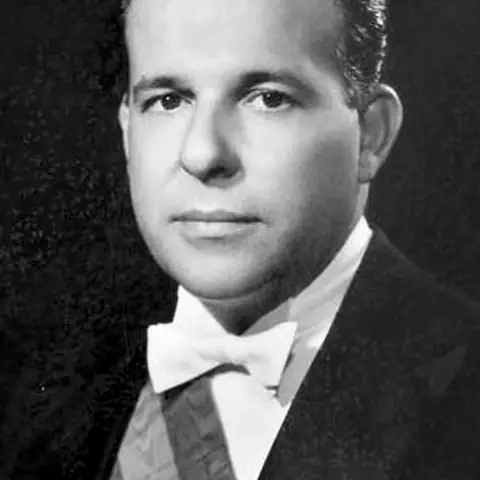
Who was João Goulart?
João Goulart, nicknamed Jango, was born to a ranching family in São Borja, the same town as Getúlio Vargas. He rose through the Brazilian Labor Party and served as Vargas's labor minister in 1953-1954. His call to double the minimum wage helped cost him that job. Brazilians elected him vice president in 1955 and 1960. When President Jânio Quadros quit in 1961, military leaders tried to stop Goulart from taking over. A deal made him president, but under a parliamentary system with weaker powers, which a vote in January 1963 undid. His push for sweeping reforms split the country. The army removed him on 1 April 1964, and he died in exile in Argentina in 1976.
Political views
- As labor minister in 1954 he asked for the minimum wage to be doubled, and Vargas later agreed.Source: www18.fgv.br
- Signed the 1962 law creating a year-end thirteenth salary and the 1963 Rural Worker Statute, which brought labor protections to farm workers.Source: planalto.gov.br
- In 1962 he signed a law that tightened rules on foreign investors and capped how much profit they could send out of the country.Source: planalto.gov.br
- Issued a decree in March 1964 allowing the government to take over land beside federal highways and railways for land reform.Source: planalto.gov.br
- Opened a campaign for 'basic reforms' with a rally of around 150,000 people in Rio de Janeiro on 13 March 1964, and asked for constitutional change to carry them out.Source: www18.fgv.br
- Re-established ties with the Soviet Union in 1961 and in 1962 refused to back American-led sanctions on Cuba.Source: www18.fgv.br
Legacy
Goulart's time as president is one of the most disputed periods in Brazil's history. Supporters, and many historians, see a reformist democrat who tried to bring labor rights, land and schooling to the poor majority and who was toppled by a plot of soldiers and civilians with American backing. Critics at the time, including most of the press, Church leaders and business, said he allowed communist influence, fed strikes and indiscipline in the ranks, and tried to get round Congress. Economists note that his Three-Year Plan, drawn up by Celso Furtado, did not stop rising inflation. The coup began 21 years of military rule. In 2013 Congress annulled the session that declared the presidency vacant, and his body was dug up to test claims, never proven, that he was poisoned.