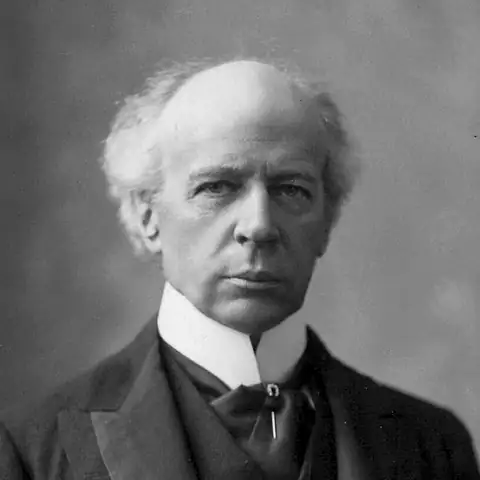
Who was Wilfrid Laurier?
Wilfrid Laurier was born in 1841 in Saint-Lin, in what was then Canada East. He qualified as a lawyer in Montreal and entered politics for the Liberals in the 1870s. He led the party from 1887 and won the 1896 election, becoming the first prime minister from French Canada. He stayed in power until 1911 while immigration, railway building and Prairie settlement transformed the country. Alberta and Saskatchewan became provinces in 1905. The 1911 election, fought over reciprocity with the United States and the question of a navy, put him out of office. He led the opposition until he died in 1919.
Political views
- Settled the Manitoba schools dispute through the 1896 Laurier-Greenway compromise, describing his method as sunny ways, as opposed to forcing the province from Ottawa.Source: cbc.ca
- While in opposition he argued for a moderate tariff, provincial autonomy and Canada's links with the Crown.Source: biographi.ca
- Made a trade deal with America, called reciprocity, the centre of his 1911 campaign, and was defeated.Source: en.wikipedia.org
- Despatched 1,000 volunteers to fight in the Boer War in 1899, insisting it set no precedent, and in 1902 turned down an imperial council and an imperial navy.Source: biographi.ca
- Created the Canadian navy in 1910 through the Naval Service Act.Source: en.wikipedia.org
- Increased the head tax on Chinese immigrants twice: to $100 in 1900, then to $500 in 1903.Source: en.wikipedia.org
- Opposed conscription in 1917. Liberals who supported it left to join Borden's Unionist government, and the party split.Source: en.wikipedia.org
Legacy
To admirers Laurier was a great peacemaker who kept English and French Canada together, widened Canada's independence inside the British Empire and presided over the growth that filled the West with settlers. His fifteen years are still the longest unbroken run for any Canadian prime minister, and in 2015 Justin Trudeau brought back his phrase sunny ways. Critics say the Manitoba deal failed to restore Catholic separate schools. Historians also see the raised head tax on Chinese immigrants and a 1911 order aimed at Black American migrants as marks of a racially restrictive immigration policy. His stand against conscription in 1917 left the Liberals split along language lines.