12axes-testTake the test
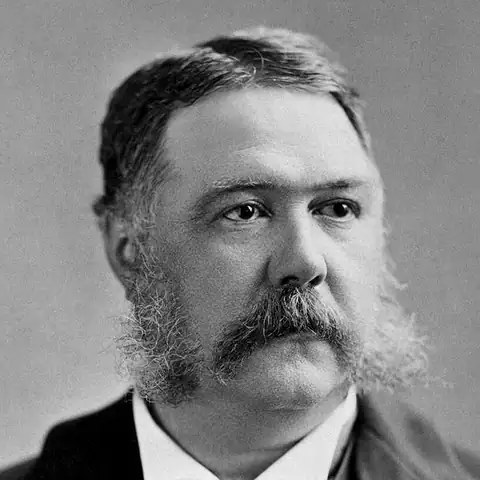
Chester A. Arthur
Historical figureUnited States1829-1886

Chester A. Arthur

21st President of the United States (1881-1885) · Vice President of the United States

President who took office after Garfield's murder, surprised critics by backing civil service reform and lower tariffs, and also signed the Chinese Exclusion Act.

Profile on 12 axes6 of 12 documented
ECONOMYSTATESOCIETYWORLDOwnershipMarketsWelfareAuthoritySecurityStructureMoralityReligionTechnologyCultureTradeForeign
Where they stood

Chester A. Arthur, axis by axis

  1. 01OwnershipNo clear record
    PublicPrivate

    The sources show no recorded position, so this axis is left blank.

  2. 02MarketsNo clear record
    PlannedFree

    The sources show no recorded position on regulating the economy, so this axis is left blank.

  3. SharedSelf-reliant

    Vetoed a big 1882 public-works bill as wasteful local spending and wanted the surplus cut by lowering taxes, not by spending more.

  4. DemocraticStrong leader

    He came from machine politics, yet as president he signed the Pendleton Act, which started a merit-based civil service.

  5. 05SecurityNo clear record
    LibertyOrder

    No recorded position on liberties or policing, so this axis is left blank.

  6. 06StructureNo clear record
    LocalCentral

    No recorded position on federal versus state power, so this axis is left blank.

  7. ProgressiveTraditional

    Signed the 1882 Edmunds Act, which outlawed polygamy at federal level and took the vote from polygamists.

  8. 08ReligionNo clear record
    SecularReligious

    The Edmunds Act hit a Latter-day Saint practice but is counted under morality. He had no wider plan on religion and law, so this axis is left blank.

  9. 09TechnologyNo clear record
    EmbraceCaution

    No recorded view, and the question belongs to a later age, so this axis is left blank.

  10. MulticulturalNational identity

    Rejected a 20-year bar on Chinese newcomers, but then signed the 1882 Exclusion Act, which stopped Chinese laborers for ten years and withheld citizenship.

  11. GlobalProtected

    Parted ways with Republican high-tariff thinking by backing a commission that urged broad cuts.

  12. CooperationStrength

    Got a modern steel fleet under way and supported the Naval War College.

6 axes have no clear record, so matching leaves them out.

Who was Chester A. Arthur?

Chester Arthur practised law in New York and built his career inside Senator Roscoe Conkling's Republican machine. He ran the New York Custom House until President Hayes fired him in 1878 during a reform drive. In 1880 the party put him on the ticket as vice president, mainly to keep Conkling's wing happy. When Garfield died of an assassin's bullet in 1881, Arthur became president. Many expected a spoilsman, but he backed civil service reform, blocked wasteful spending and asked for lower tariffs. His party did not renominate him in 1884, and he died two years later.

Political views

  • Used his veto on the 1882 Rivers and Harbors bill, calling it wasteful local spending, and said the surplus should be cut by lowering taxes.Source: millercenter.org
  • Signed the Pendleton Act of 1883, which made some federal jobs depend on competitive exams instead of political favors.Source: millercenter.org
  • Supported a tariff commission that wanted rates cut by 20 to 25 percent, which put him at odds with party bosses and eastern manufacturers.Source: millercenter.org
  • Rejected a 20-year bar on Chinese newcomers, then signed the 1882 Exclusion Act, which stopped Chinese laborers for a decade and withheld citizenship.Source: millercenter.org
  • Began building a modern steel navy and cracked down on graft in the Navy Department.Source: millercenter.org
  • Signed the 1882 Edmunds Act, which outlawed polygamy at federal level in the territories.Source: en.wikipedia.org

Legacy

Historians often call Arthur a surprise reformer. He rose through the spoils system, yet he put his name to the law that started to end it, and he questioned his party's high-tariff creed. The Miller Center praises him for a flexible mind and with the first steps toward a modern navy. Critics recall his years in Conkling's machine, when he took political payments from customs workers, and note that the Pendleton Act first covered only a small share of federal jobs. Most historians today see his signing of the Chinese Exclusion Act, the first federal law to exclude people because of their nationality, as a grave injustice. Few Americans remember him.

How close are you to Chester A. Arthur?

Take the 12 Axes test and see which historical figure is your political twin, axis by axis.

Take the test

Chester A. Arthur: questions

Was Chester Arthur a reformer?

In office, yes. He had been a machine politician, but he backed the Pendleton Act, which started merit-based hiring in the federal service. Many people at the time did not expect this.

Did Chester Arthur sign the Chinese Exclusion Act?

Yes, in 1882. He first vetoed a 20-year ban as too long, then signed a ten-year ban on Chinese laborers. No earlier federal law had excluded a group on the basis of nationality.

What did Chester Arthur think about tariffs?

He wanted lower tariffs than most Republicans of his day. He backed a commission that urged cuts of 20 to 25 percent, though Congress passed a smaller reduction.

Sources