12axes-testTake the test
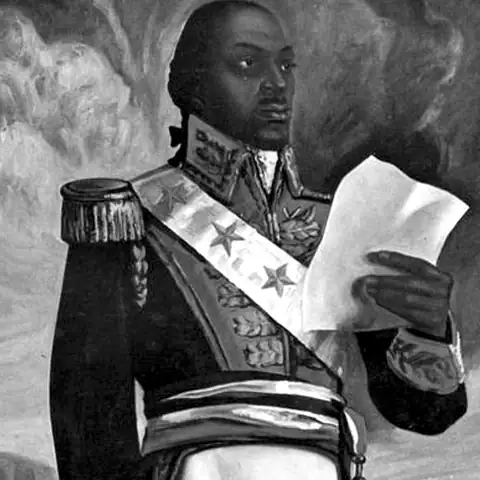
Toussaint Louverture
Historical figureHT1743-1803

Toussaint Louverture

Governor-General of Saint-Domingue for life (1801-1802) · General-in-Chief of the army of Saint-Domingue

Leader of the Haitian Revolution who ended slavery in Saint-Domingue on paper, then ruled as governor for life and enforced plantation labor until Napoleon's army seized him in 1802.

Profile on 12 axes6 of 12 documented
ECONOMYSTATESOCIETYWORLDOwnershipMarketsWelfareAuthoritySecurityStructureMoralityReligionTechnologyCultureTradeForeign
Where they stood

Toussaint Louverture, axis by axis

  1. 01OwnershipNo clear record
    PublicPrivate
  2. PlannedFree

    The constitution called the colony agricultural and barred any interruption of work on the plantations, so labor was directed by the state. Leans toward planning.

  3. 03WelfareNo clear record
    SharedSelf-reliant
  4. DemocraticStrong leader

    The 1801 constitution named him governor for the rest of his life and gave him the right to pick his successor. He also answered revolts with force.

  5. LibertyOrder
  6. 06StructureNo clear record
    LocalCentral
  7. 07MoralityNo clear record
    ProgressiveTraditional
  8. SecularReligious

    Catholicism was the only publicly professed religion, and one account says Voodoo was outlawed.

  9. 09TechnologyNo clear record
    EmbraceCaution
  10. MulticulturalNational identity

    The text opened all employment to people of any color and called all residents free and French. Mildly toward multicultural, though the score rests on a short text.

  11. 11TradeNo clear record
    GlobalProtected
  12. CooperationStrength

    The constitution claimed wide autonomy and he expelled French representatives, yet it still described the colony as French. Moderately toward sovereignty.

6 axes have no clear record, so matching leaves them out.

Who was Toussaint Louverture?

Toussaint Louverture was born enslaved in Saint-Domingue and freed by private manumission in 1776. He joined the 1791 uprising, fought first for Spain, then switched to France after it abolished slavery in 1794. He rose to commander-in-chief, defeated rival forces and a British invasion, and in 1801 issued a constitution that named him governor for life. In 1802 Napoleon sent General Leclerc to restore French control. Toussaint surrendered in May, was arrested in June and shipped to France. He died of illness at the Fort de Joux prison in April 1803.

Political views

  • Wrote into the 1801 constitution that there can be no slaves in the territory and that servitude is abolished forever.Source: marxists.org
  • Opened all forms of employment to people of any color and declared that all men are born, live and die free and French.Source: marxists.org
  • Made the Catholic religion the only one publicly professed in the colony.Source: marxists.org
  • Declared the colony essentially agricultural, so work and cultivation could not be interrupted. Historians read this as restoring coerced plantation labor.Source: marxists.org
  • Had the constitution name him governor for the rest of his life, with the right to choose his successor.Source: marxists.org
  • Kept Saint-Domingue formally French while claiming broad autonomy. Napoleon read the text as a threat and sent an army.Source: caribbeannationalweekly.com
  • Moved against rivals, including the mixed-race population, and put down insurrections by plantation workers who resisted his labor system.Source: napoleon-empire.org

Legacy

Admirers see Toussaint as the man who turned a slave revolt into a lasting force, who beat Spanish, British and rival armies, and whose constitution wrote the end of slavery into law. His capture became a symbol of French betrayal. Critics point to the system he built. The 1801 constitution fixed him in power for life and bound workers to the plantations, and the labor rules provoked resistance that his forces put down brutally. He also moved against the mixed-race population. Planters, unhappy with conditions, backed Napoleon's effort to remove him. He died in a French prison in 1803.

How close are you to Toussaint Louverture?

Take the 12 Axes test and see which historical figure is your political twin, axis by axis.

Take the test

Toussaint Louverture: questions

Did Toussaint Louverture abolish slavery?

His 1801 constitution declared that servitude was abolished forever. It also required plantation work and named him governor for life, so many historians say workers still faced coercion.

How did Toussaint Louverture die?

Napoleon's forces arrested him in 1802 and sent him to France. He was held at Fort de Joux and died there in April 1803 of illness, with little medical care.

Did Toussaint Louverture want independence from France?

Not formally. His constitution kept Saint-Domingue a French colony but claimed wide autonomy, and Napoleon treated it as a threat. Napoleon sent an army to remove him, and he died in French custody in 1803.

Sources