12axes-testTake the test
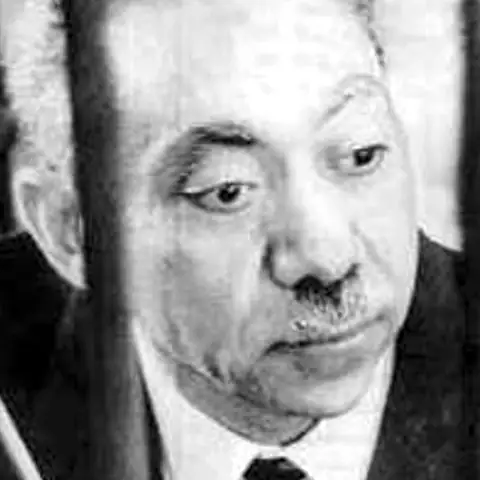
Sayyid Qutb
Historical figureEG1906-1966

Sayyid Qutb

Islamist theorist and author of Milestones · Member of the Muslim Brotherhood's leadership

Egyptian writer and Muslim Brotherhood thinker whose Milestones argued that societies not ruled by Shari'a had returned to pre-Islamic ignorance, ideas later used by jihadist movements. Nasser's government hanged him in 1966.

Profile on 12 axes6 of 12 documented
ECONOMYSTATESOCIETYWORLDOwnershipMarketsWelfareAuthoritySecurityStructureMoralityReligionTechnologyCultureTradeForeign
Where they stood

Sayyid Qutb, axis by axis

  1. PublicPrivate

    In Social Justice in Islam he protected private property as a reward for work but called for collective ownership of essential resources.

  2. PlannedFree

    He banned usury and used zakat and inheritance rules to limit concentrated wealth, while keeping private property. A mild tilt toward regulation.

  3. SharedSelf-reliant
  4. DemocraticStrong leader

    But he also sketched a community-chosen imam and a consultative council. Moderately toward strong rule.

  5. 05SecurityNo clear record
    LibertyOrder
  6. 06StructureNo clear record
    LocalCentral
  7. ProgressiveTraditional

    He held that women's main role is domestic, urged modest dress and limited public mixing, and condemned Western sexual mixing.

  8. SecularReligious

    He held that God alone is sovereign and that any society not governed by Shari'a is jahili. The top of the scale.

  9. 09TechnologyNo clear record
    EmbraceCaution
  10. 10CultureNo clear record
    MulticulturalNational identity
  11. 11TradeNo clear record
    GlobalProtected
  12. 12Foreign policyNo clear record
    CooperationStrength

6 axes have no clear record, so matching leaves them out.

Who was Sayyid Qutb?

Sayyid Qutb was born in an Egyptian village in 1906, though some say 1903. He trained as a teacher in Cairo, worked for the Ministry of Education and wrote secular poetry and criticism. In 1948 he turned to Islamist writing and went to the United States on a study tour until 1950. He joined the Muslim Brotherhood in the early 1950s. Imprisoned after the 1954 attempt on Nasser's life, he wrote much of his Quran commentary and Milestones in jail. Released in 1964, he was convicted of plotting against the government and hanged on 29 August 1966.

Political views

  • Argued in Social Justice in Islam (1949) that wealth belongs to God, private property is protected, and zakat and inheritance rules limit its concentration.Source: iep.utm.edu
  • Held that essential resources should be collectively owned and that individuals have a moral duty to help the needy.Source: iep.utm.edu
  • Taught hakimiyya: God alone is sovereign, so no ruler or nation may claim sovereignty.Source: iep.utm.edu
  • Called any society not governed by Shari'a jahili, including nominally Muslim states, and urged committed believers to separate from it.Source: iep.utm.edu
  • Redefined jihad as revolutionary struggle that could sometimes be initiated, after a long preparation modeled on the Prophet's years in Mecca.Source: iep.utm.edu
  • Rejected democracy as a Western idea of rule by the people, proposing instead an imam chosen by the community and a consultative parliament.Source: iep.utm.edu
  • Judged American life materially impressive but morally corrupt after his stay in the United States, and opposed Marxism, capitalism and Arab nationalism.Source: newworldencyclopedia.org
  • Was jailed after the October 1954 attempt on Nasser's life, when the government crushed the Brotherhood; prison treatment radicalized his thinking.Source: newworldencyclopedia.org

Legacy

Followers see Qutb as a martyr who named the spiritual crisis of Muslim societies and was killed for it. His thought, called Qutbism, became central to modern Islamism, and Ayman al-Zawahiri, later a leader of al-Qaeda, was among his followers. Critics range from al-Azhar scholars, who labeled him deviant, to Western observers who tie his ideas to militant violence. Others point out that his trial before execution was a show trial. Nasser's government, which jailed and then hanged him, silenced opponents and has been described as a police state.

How close are you to Sayyid Qutb?

Take the 12 Axes test and see which historical figure is your political twin, axis by axis.

Take the test

Sayyid Qutb: questions

What did Sayyid Qutb believe?

He held that God alone is sovereign, that societies not ruled by Shari'a had fallen into jahiliyya, and that a committed vanguard should work to restore Islamic rule. He also wrote on social justice.

What is Milestones by Sayyid Qutb?

Milestones, published in 1964, is his best-known book. It argues that Muslim societies had reverted to pre-Islamic ignorance and calls for revolutionary struggle, including jihad, to restore Islam.

Why was Sayyid Qutb executed?

Egypt convicted him of conspiring to overthrow the government and hanged him on 29 August 1966. Many observers call the trial a show trial. His writings had inspired opposition to Nasser.

Sources