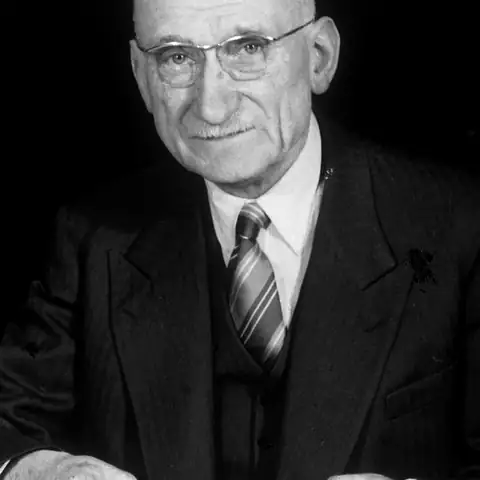
Who was Robert Schuman?
Robert Schuman was born in Luxembourg as a German citizen and grew up in Lorraine. When the region went back to France in 1919, he became French. A devout Catholic and a lawyer, he won a seat in parliament. After World War II he helped lead the Christian democratic MRP party. He held office as finance minister, twice as prime minister, and as foreign minister between 1948 and 1953. In 1940 the Gestapo questioned him in Metz after he protested Nazi methods. He and Jean Monnet drafted the plan of 1950 behind the European Coal and Steel Community. In 1958 he took the chair at the opening session of the European Parliamentary Assembly.
Political views
- He proposed that one High Authority run coal and steel output for both France and Germany, with room for other European states to join.Source: robert-schuman.eu
- In his words, sharing these industries would make another war between the two old enemies more than unthinkable. It would be materially impossible.Source: robert-schuman.eu
- He called the coal and steel pool the first solid step toward a European federation, which he thought peace required.Source: robert-schuman.eu
- His view was that Europe would be built slowly, through real projects that tie countries together.Source: european-union.europa.eu
- He played a key part in the talks that set up the Council of Europe, took in Marshall Plan aid and created NATO.Source: european-union.europa.eu
- His politics rested on Christian democratic ideas.Source: en.wikipedia.org
- Heading the government in 1947 and 1948, he kept parliament stable while revolutionary strikes swept the country.Source: en.wikipedia.org
Legacy
Across Europe he is honored as one of the EU's founders, and every 9 May is Europe Day. Supporters say his speech opened a lasting peace between France and Germany. When it was made, Gaullists and communists attacked the High Authority because it cut into national independence. Later critics of the EU say the method he started gave too much power to officials nobody elected. The Catholic Church named him venerable in 2021, which adds a religious dimension to how admirers remember him.
In their own words
“Europe will not be made all at once, or according to a single plan. It will be built through concrete achievements which first create a de facto solidarity.”