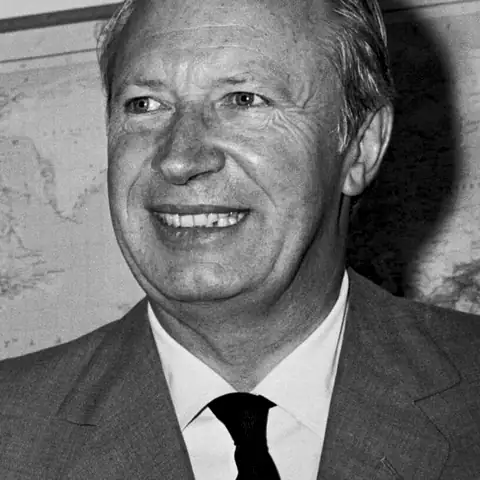
Who was Edward Heath?
Edward Heath was born in Kent in 1916, the son of a carpenter and a maid, and went on to study at Oxford. Visits to Europe in the 1930s, including Spain in its civil war, made him a believer in European unity. He served with the artillery in the war and entered Parliament in 1950. In 1963 France blocked his first bid to bring Britain into the European Communities. He led the Conservatives from 1965 and won the 1970 election. His government changed the currency to decimals and reshaped local government. Strikes by coal miners led to the three-day week, and he was out of power in 1974. Margaret Thatcher beat him for the party leadership in 1975. He stayed an MP until 2001 and died in 2005.
Political views
- Britain joined the European Communities under him on the first day of 1973. Parliament had approved entry with the European Communities Act 1972.Source: legislation.gov.uk
- Won office on a programme that later looked like an early form of Thatcherism, but changed direction on the economy when unemployment climbed.Source: gov.uk
- Limited trade union power through the Industrial Relations Act 1971.Source: legislation.gov.uk
- Ruled Northern Ireland directly from London, allowed internment without trial, and supported the Sunningdale power-sharing deal of 1973.Source: en.wikipedia.org
- Put less weight on Britain's special bond with the United States so as to move closer to Europe.Source: en.wikipedia.org
- After leaving office he became a loud critic of Thatcherism and sat on the Brandt Commission on global development.Source: en.wikipedia.org
Legacy
Supporters remember Heath as the man who won Britain a seat at the European table. They see a one-nation Tory who hated mass unemployment and tried to share power in Northern Ireland. Critics on the right say that his 1972 U-turn showed weakness and left inflation and union strength unsolved. Critics on the left fought his laws on trade unions. In Northern Ireland, internment and Bloody Sunday in January 1972 did lasting harm. On that day soldiers killed 13 marchers at a civil rights protest in Derry, and another man died later of his wounds. Catholic trust in the state was badly damaged. Those who oppose European integration still blame him for the decision to join.
In their own words
“many millions of people right across the world will rejoice that we have taken our rightful place in a truly United Europe.”