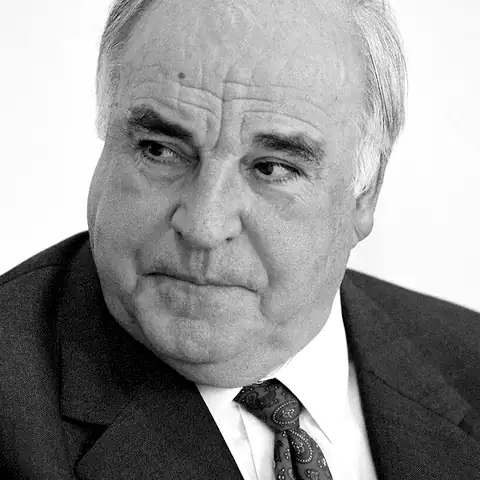
Who was Helmut Kohl?
Helmut Kohl joined the Christian Democratic Union in 1946, just after the war. He ran the state of Rhineland-Palatinate from 1969 and took over as head of the national party in 1973. After several years leading the opposition, he became chancellor in 1982 when parliament voted out Helmut Schmidt and chose him instead. He then held the post until 1998, longer than any other chancellor since the war. In November 1989 he laid out a ten-point plan for German unity, and the two Germanys joined in October 1990. Voters ended his rule in 1998. A scandal over secret party donations broke the next year.
Political views
- In November 1989 he set out a ten-point plan to end the split of Germany and of Europe.Source: hdg.de
- In December 1990 he led the CDU and its Bavarian partner to 43.8 percent in the first election held across a united Germany.Source: hdg.de
- He worked with France's François Mitterrand on the Maastricht Treaty, which founded the European Union and set the course for the euro.Source: en.wikipedia.org
- In 1998 he won the Bundestag's approval for Germany to join European monetary union. The euro arrived in 1999.Source: hdg.de
- He was a leading voice for letting countries in the east of Europe join the EU.Source: en.wikipedia.org
- In 1982 he stood by NATO's plan to place new missiles in Europe while also seeking talks. Later he accepted the double zero deal on medium-range missiles.Source: hdg.de
- In December 1982 he lost a confidence vote on purpose so that early elections could be held. They were, and he won them in March 1983.Source: hdg.de
- In 2011 he criticized the decision to phase out nuclear power.Source: en.wikipedia.org
Legacy
Supporters call Kohl the chancellor of reunification and one of Europe's great statesmen, and in 1998 the EU named him an honorary citizen of Europe. Critics say the way the two economies were merged left eastern Germany with high unemployment, and some economists doubted that the monetary union was timed well. In 1999 he admitted taking illegal party donations and would not name the donors. This hurt his standing and cost him the CDU's honorary chairmanship. After the 1998 defeat he took responsibility and gave up the party leadership.