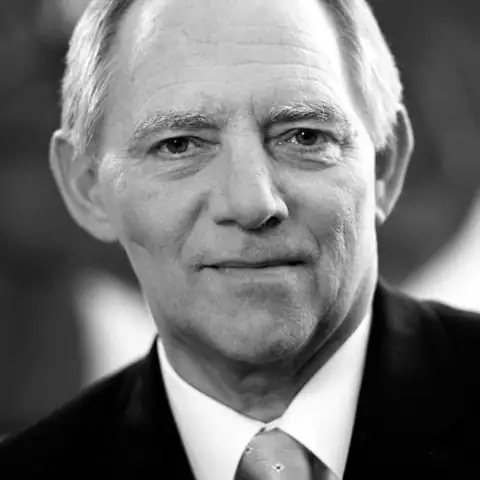
Who was Wolfgang Schäuble?
Wolfgang Schäuble trained as a lawyer in Baden. He won a Bundestag seat in 1972 and kept it until his death, a record for the chamber. Helmut Kohl picked him as chief of staff in 1984, then as interior minister five years later. In 1990 Schäuble handled the talks on the treaty that joined the two Germanys. An attacker with mental illness shot him at an October 1990 campaign event, leaving him paralyzed from the chest down. He later led the CDU/CSU parliamentary group and the party, but resigned from both in 2000 because of the donations scandal. Under Angela Merkel he was interior and then finance minister, then Bundestag president from 2017 to 2021. He died in December 2023.
Political views
- In 1990 he negotiated the Unification Treaty and signed it on behalf of the Federal Republic.Source: hdg.de
- His 1991 Bundestag speech, widely noted, argued that Berlin should be the seat of government.Source: hdg.de
- Starting in 2014, the federal budget balanced with no new borrowing. That had not happened since 1969.Source: hdg.de
- In the euro crisis he took a hard line with southern European countries and refused the IMF's calls to give Greece longer to cut its deficits.Source: en.wikipedia.org
- He wanted the EU to have more power over foreign, security and defence policy.Source: hdg.de
- In 1999 he launched a CDU petition with the slogan 'Integration yes, dual citizenship no'.Source: hdg.de
- He set up the German Islam Conference in 2006 as a permanent forum where government and Muslim communities could talk.Source: hdg.de
Legacy
Admirers call Schäuble an architect of German unity who defended sound budgets and European integration. He was given the Charlemagne Prize in 2012. Critics in southern Europe, including the Greek finance minister Yanis Varoufakis, held him chiefly responsible for harsh austerity. German critics argued that his balanced-budget goal left public investment short. A Big Brother Award from civil liberties groups followed his security policy. His name was also damaged in the 2000 donations scandal, when he admitted taking a 100,000-mark cash gift for the CDU from the arms dealer Karlheinz Schreiber, and the party's former treasurer disputed his account of how it was handed over.