12axes-testTake the test
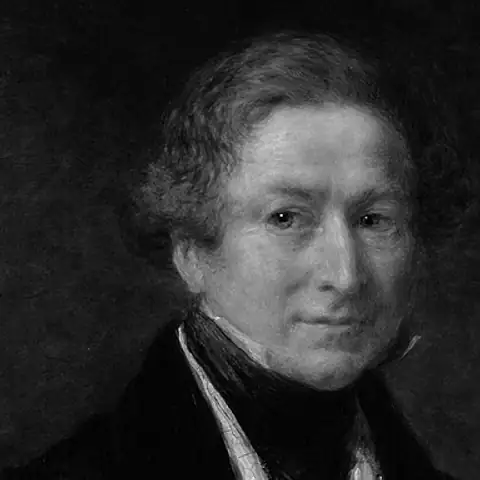
Robert Peel
Historical figureUnited Kingdom1788-1850

Robert Peel

Prime Minister of the United Kingdom (1834-1835, 1841-1846) · Home Secretary

British Tory Prime Minister who created the Metropolitan Police, shaped modern Conservatism through the Tamworth Manifesto, and divided his party by ending the Corn Laws in 1846.

Profile on 12 axes10 of 12 documented
ECONOMYSTATESOCIETYWORLDOwnershipMarketsWelfareAuthoritySecurityStructureMoralityReligionTechnologyCultureTradeForeign
Where they stood

Robert Peel, axis by axis

  1. PublicPrivate
  2. PlannedFree

    Cut trade barriers and revived the income tax, but also backed laws on factories and mines. This points toward markets with some regulation.

  3. SharedSelf-reliant
  4. DemocraticStrong leader
  5. LibertyOrder

    His police force dates from 1829, and he also took roughly 100 offences off the death-penalty list. The score is mildly toward order.

  6. LocalCentral
  7. ProgressiveTraditional
  8. SecularReligious

    Defended the established Church. Yet in 1829 he gave up resisting Catholic emancipation, and later he funded the Catholic seminary at Maynooth. The score is moderately religious.

  9. 09TechnologyNo clear record
    EmbraceCaution

    No recorded view on modern technology debates, given the nineteenth-century setting.

  10. 10CultureNo clear record
    MulticulturalNational identity

    He left no view on immigration or multiculturalism as we use the terms now, so this axis is null.

  11. GlobalProtected
  12. CooperationStrength

2 axes have no clear record, so matching leaves them out.

Who was Robert Peel?

The son of a rich Lancashire cotton manufacturer who sat in Parliament, Robert Peel was born in 1788. He became an MP in 1809. Early on he resisted Catholic emancipation and was jeered as Orange Peel. After taking the Home Office in 1822 he overhauled the criminal law and the prisons. In 1829 he created London's police force and, in a reversal, helped pass emancipation. The Tamworth Manifesto of 1834 gave the Conservatives a fresh program. He led two governments, in 1834-1835 and 1841-1846, and died in 1850 after a fall from his horse.

Political views

  • The Tamworth Manifesto accepted the Reform Act of 1832 as settled and promised to review institutions carefully while protecting established rights.Source: historyhome.co.uk
  • Started London's Metropolitan Police force in 1829.Source: gov.uk
  • As Home Secretary, cut around 100 offences from the list of crimes that carried the death penalty, and improved the prisons.Source: gov.uk
  • Freed up trade during the 1840s, although he was not a strict free-trade thinker.Source: gov.uk
  • Scrapped the Corn Laws in 1846, so imported grain no longer carried duties, at a time of poor harvests and famine in Ireland.Source: ebsco.com
  • Supported the Mines Act of 1842 and the Factory Act of 1844, both of which restricted the hours and jobs of women and children.Source: gov.uk

Legacy

Admirers call Peel the father of modern conservatism, a practical reformer who put the country before his party, and they cite the police, penal reform and freer trade. Opponents inside his party, Disraeli foremost, accused him of selling out the landowners and breaking faith with voters. They had the Corn Laws and emancipation in mind. After the 1846 split, the Conservatives did not win a clear majority for roughly a generation. Historians still debate whether his changes of mind came from principle or from convenience.

In their own words

“a careful review of institutions, civil and ecclesiastical, undertaken in a friendly temper combining, with the firm maintenance of established rights, the correction of proved abuses and the redress of real grievances”
Tamworth Manifesto, December 1834

How close are you to Robert Peel?

Take the 12 Axes test and see which historical figure is your political twin, axis by axis.

Take the test

Robert Peel: questions

Was Robert Peel a Conservative?

Yes. He started as a Tory and went on to lead the Conservatives, whom he helped remodel through the Tamworth Manifesto. His loyal supporters after 1846 were known as Peelites.

Why did Peel end the Corn Laws?

He concluded that food needed to be cheaper after bad harvests and the Irish famine. Most of his own party opposed him, and he resigned soon after the repeal passed.

Why are police officers called bobbies?

The nickname comes from Robert Peel, who founded the Metropolitan Police in 1829. Officers were also sometimes called peelers, and both names stuck.

Sources