12axes-testTake the test
Gustav Stresemann
Historical figureGermany1878-1929

Gustav Stresemann

Chancellor of Germany (1923) · Foreign Minister of Germany (1923-1929)

Right-liberal Weimar statesman who steadied the currency as chancellor in 1923, then as foreign minister won the Locarno pacts and a seat for Germany in the League of Nations.

Profile on 12 axes7 of 12 documented
ECONOMYSTATESOCIETYWORLDOwnershipMarketsWelfareAuthoritySecurityStructureMoralityReligionTechnologyCultureTradeForeign
Where they stood

Gustav Stresemann, axis by axis

  1. PublicPrivate
  2. PlannedFree
  3. SharedSelf-reliant

    He was a lawyer for business groups, yet he supported wider social laws and the workers' right to bargain collectively, so he is scored neutral.

  4. DemocraticStrong leader

    He stayed a monarchist at heart, but he came to accept the Weimar Republic and to defend it.

  5. LibertyOrder
  6. 06StructureNo clear record
    LocalCentral

    There is no clear record of his stance on central versus local power, nor on morality, religion, technology or trade as questions of principle, so these are left null.

  7. 07MoralityNo clear record
    ProgressiveTraditional
  8. 08ReligionNo clear record
    SecularReligious
  9. 09TechnologyNo clear record
    EmbraceCaution
  10. MulticulturalNational identity
  11. 11TradeNo clear record
    GlobalProtected
  12. CooperationStrength

    He wanted annexations during the First World War. Later he sought reconciliation through Locarno and the League, while still hoping to revise the Polish border by peaceful means.

5 axes have no clear record, so matching leaves them out.

Who was Gustav Stresemann?

Gustav Stresemann grew up in Berlin, where his father sold beer. He studied economics and worked as a lawyer for industry groups in Saxony. He joined the National Liberals, won a Reichstag seat in 1907 and became party leader in 1917. After Germany's defeat he set up the German People's Party, a right-of-centre liberal force. He was chancellor for roughly a hundred days in 1923, leading a broad coalition. From then until he died in 1929 he was foreign minister in one cabinet after another. In 1926 he shared the Nobel Peace Prize with the French statesman Aristide Briand.

Political views

  • In the First World War he backed German territorial gains and unrestricted submarine warfare, and he later opposed the Treaty of Versailles.Source: nobelprize.org
  • As a young deputy he supported more social legislation, which put him at odds with the right wing of his party.Source: dhm.de
  • He took the view that employers should accept the right of workers to organize and bargain together.Source: nobelprize.org
  • As chancellor in 1923 he called off passive resistance to the occupation of the Ruhr, and a new currency ended the runaway inflation.Source: dhm.de
  • He worked on the 1924 Dawes Plan, which eased the burden of reparations payments.Source: dhm.de
  • He started the talks behind the 1925 Locarno agreements, in which Germany, France and Belgium gave up changing their shared borders by force.Source: dhm.de
  • In 1926 he won Germany a place in the League of Nations.Source: nobelprize.org

Legacy

Admirers rank Stresemann as the ablest statesman of the Weimar years. They credit him with steadying the money and bringing Germany back into European affairs by talks instead of threats, and the Nobel Committee honored his Locarno work. Nationalists of his day attacked him for accepting the western borders and the reparations deals. Historians add that he had pushed for conquest during the war, stayed a monarchist at heart and hoped Poland's money troubles would let Germany change its border without a fight. He died in 1929, just before the Depression, and many see that as a heavy blow to the republic.

In their own words

“Locarno may be interpreted as signifying that the States of Europe at last realize that they cannot go on making war upon each other without being involved in common ruin.”
Radio address to the nation, 3 November 1925

How close are you to Gustav Stresemann?

Take the 12 Axes test and see which historical figure is your political twin, axis by axis.

Take the test

Gustav Stresemann: questions

Which party did Gustav Stresemann lead?

Before 1918 he was a National Liberal. After the war he founded the German People's Party (DVP), a right-liberal party, and led it until he died.

Why did Stresemann get the Nobel Peace Prize?

He and French foreign minister Aristide Briand shared the 1926 prize for the Locarno agreements. These secured Germany's western borders and calmed relations between Germany and France.

Did Stresemann support democracy?

He began as a monarchist and was slow to embrace the republic. In office he came to defend it, and he worked with parties of the centre and the moderate left.

Sources

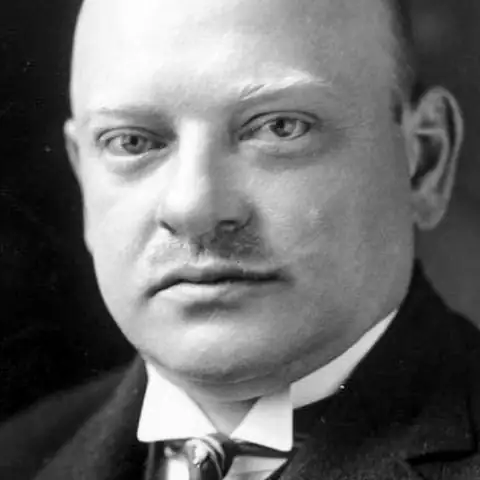
Portrait: Bundesarchiv Bild 146-1989-040-27, Gustav Stresemann.jpg by Unknown author, CC BY-SA 3.0 de, via Wikimedia Commons. Cropped and converted to grayscale by 12axes-test.com.