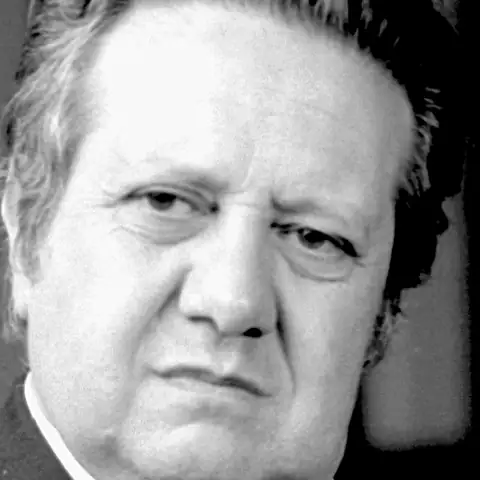
Who was Mário Soares?
Soares was born in Lisbon in 1924. He studied history, philosophy and law and became a student leader against the authoritarian government. He opposed the regimes of Salazar and Caetano, was jailed 12 times, was banished to São Tomé and lived in exile in France from 1970 to 1974. After the 1974 coup he served as foreign minister and oversaw independence for Portugal's African colonies. He led the democratic opposition to a Communist push in 1975, and his Socialist Party won the 1976 elections. He was prime minister twice and led Portugal into the European Economic Community in 1986. That year he became the country's first civilian president in 60 years. He died in Lisbon in January 2017.
Political views
- He helped found the Portuguese Socialist Action in 1964 and aided the rebuilding of the Socialist Party, building ties with Olof Palme, Willy Brandt, Bruno Kreisky and François Mitterrand.Source: encyclopedia.com
- As foreign minister after the 1974 coup he oversaw the granting of independence to Portugal's African colonies.Source: encyclopedia.com
- In the long, hot summer of 1975 he led the democratic opposition to a push for power by hardline Communists, and he resigned from the government that year.Source: irishtimes.com
- His party won the 1976 elections and he served as prime minister from 1976 to 1978, then again after the 1983 elections.Source: encyclopedia.com
- He played a major role in bringing Portugal into the European Economic Community, aiming to modernize its economy and tie it to Western Europe. Portugal joined in 1986.Source: encyclopedia.com
- He won the 1986 presidential election and was re-elected in 1991 with about 70 percent of the vote. Jorge Sampaio succeeded him in 1996.Source: encyclopedia.com
- His austerity measures, backed by the IMF, made him unpopular during the recession.Source: irishtimes.com
- He never advocated retribution against the old regime, and in the 1980s he helped secure an amnesty for leftwing extremists accused of terrorism.Source: irishtimes.com
Legacy
Admirers call Soares the father of Portuguese democracy, who resisted the dictatorship at great personal cost, faced down a Communist bid for power in 1975 and anchored Portugal in Europe. Critics, especially white settlers, argued that the decolonization he handled was too hasty, and some accused him of high-handedness. His IMF-backed austerity made him unpopular during the recession of the early 1980s. He narrowly won the presidency in 1986, then was re-elected by a large majority in 1991. He retired from politics in 1996.