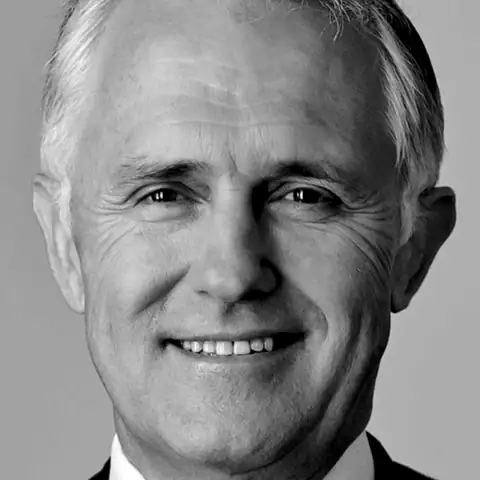
Who is Malcolm Turnbull?
Sydney-born in 1954, Malcolm Turnbull went to Oxford as a Rhodes Scholar. His career ran through journalism, law, banking and venture investing. He led the Australian Republican Movement in the lead-up to the 1999 referendum. Voters in Wentworth sent him to Parliament in 2004. He first led the Liberals from 2008, but he was dropped in 2009 over his backing for an emissions trading scheme. He won the top job back in 2015, defeating Tony Abbott, and then scraped through the 2016 election. In 2018 the party chose Scott Morrison instead, and Turnbull left Parliament.
Political views
- Argued for an Australian republic and fronted the Yes side when it lost the 1999 referendum.Source: en.wikipedia.org
- In 2009 he sided with the Rudd government's emissions trading scheme, and it cost him the Liberal leadership.Source: en.wikipedia.org
- Proposed cutting company tax and cracking down on multinationals that dodge it, under his Enterprise Tax Plan.Source: moadoph.gov.au
- Promoted an Innovation and Science Agenda, which aimed to turn research into commercial products and to back start-ups.Source: moadoph.gov.au
- Highlighted five trade agreements won within three years. They included Japan, Korea, China and the Trans-Pacific Partnership.Source: moadoph.gov.au
- Described living within our means as fair to future generations.Source: moadoph.gov.au
- Supported a Yes vote in the 2017 same-sex marriage survey. He also unveiled the Snowy Hydro 2.0 scheme.Source: en.wikipedia.org
Legacy
Turnbull's backers point to marriage equality, which became law after the 2017 postal survey. They also credit him with an innovation agenda, several trade deals and the pumped hydro scheme at Snowy Hydro 2.0. On the right, critics said he was too progressive for many Liberal voters. On the left, critics said he gave ground on climate to hold his party together, and that his broadband plan leaned on ageing copper wires. A dual citizenship crisis in 2017 also hurt his government. Finally, his party room turned down the National Energy Guarantee, his last energy plan, and that prompted the challenge that ended his prime ministership.
In their own words
“There has never been a more exciting time to be an Australian.”