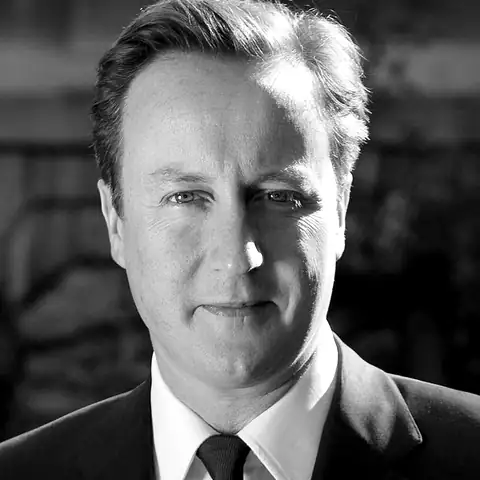
Who is David Cameron?
Born in London in 1966, David Cameron read philosophy, politics and economics at Oxford. Before parliament he worked at the Conservative Research Department, as an adviser and in the media. He won the Witney seat in 2001. The party chose him as leader in 2005, and he set out to give it a more modern image. In May 2010 he became Prime Minister at the head of a coalition, the first since the war. He won a majority in 2015. He campaigned to stay in the European Union and resigned after the 2016 vote to leave. In 2023 he came back as Foreign Secretary and left government in 2024.
Political views
- He supported the 2013 Marriage (Same Sex Couples) Act, making same-sex weddings legal in England and Wales.Source: gov.uk
- After the financial crisis he cut public spending in order to bring down the budget deficit.Source: legislation.gov.uk
- He championed the 'Big Society', which meant handing more power to communities and volunteers.Source: gov.uk
- In 2011 he said that state multiculturalism had let different cultures drift into living separate lives.Source: gov.uk
- In 2013 he promised a yes-or-no referendum on EU membership once he had renegotiated Britain's terms.Source: gov.uk
- He played a leading part in the 2011 Libya intervention and kept to the NATO defence target of 2 percent and the UN target of spending 0.7 percent of income on aid.Source: gov.uk
Legacy
Supporters say Cameron updated the Conservative Party, cut the deficit, made same-sex marriage law, helped keep Scotland in the UK in 2014 and won the party's first majority since 1992. Critics say austerity went too far and hurt public services and welfare. They also say the Libya operation left chaos behind. Above all they blame him for calling the EU referendum and losing it, which led to Brexit. In 2021 he drew criticism for lobbying ministers on behalf of Greensill Capital, a finance firm. A parliamentary inquiry found no breach of the rules but doubted his judgement.
In their own words
“You can call it liberalism. You can call it empowerment. You can call it freedom. You can call it responsibility. I call it the Big Society.”