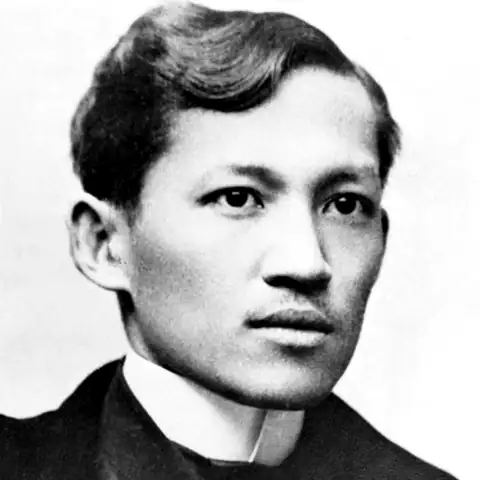
Who was José Rizal?
José Rizal was born in 1861 in Calamba, Laguna, to a well-off family. He studied at the Ateneo Municipal in Manila and the University of Santo Tomas, then medicine and humanities in Madrid. His novels Noli Me Tangere (1887) and El Filibusterismo (1891) portrayed colonial abuse and the power of the friars. He drafted the constitution of the Liga Filipina, founded on 3 July 1892, and was exiled to Dapitan, where he built a school and practiced ophthalmology. Spanish authorities executed him on 30 December 1896.
Political views
- His first novel, Noli Me Tangere, portrayed the suffering of Filipinos under Spanish rule and satirized the friars; it was banned and readers were punished.Source: encyclopedia.com
- In The Philippines a Century Hence he said reforms must be real and sincere, and named a free press and Filipino representatives in the Spanish Cortes as the essential ones.Source: gutenberg.org
- He argued that lasting union between two peoples requires equal laws and rights that make them forget racial divides, and that otherwise the colony would eventually expel the colonizer.Source: gutenberg.org
- He preferred peaceful change from above and warned that a violent break would bring bloodshed and reprisals, while accepting that independence was likely if Spain refused reform.Source: gutenberg.org
- In The Indolence of the Filipino he blamed forced labor, heavy taxation, restricted trade and a servile education system rather than race or climate for what Spaniards called Filipino laziness.Source: gutenberg.org
- He criticized the Dominican friars who owned the Calamba estate, from which his family and other tenants were expelled, and accused religious hypocrisy of impoverishing Filipinos.Source: encyclopedia.com
- He drafted the constitution of the Liga Filipina, a reformist civic body meant to promote national unity and liberalism.Source: encyclopedia.com
Legacy
Rizal is honored as the Philippines' national hero, a writer who gave Filipinos a language of dignity and equal rights, and whose execution on charges of treason and rebellion, which he denied, turned opinion against Spanish rule. The Katipunan, founded by Andrés Bonifacio, drew inspiration from the Liga Filipina. His legacy is also argued over. He wrote that he preferred peaceful reform, so historians debate how he would have judged the 1896 revolution. Some critics have also questioned how far a reformist who sought equality within the empire should be placed at the head of an independence movement.