12axes-testTake the test
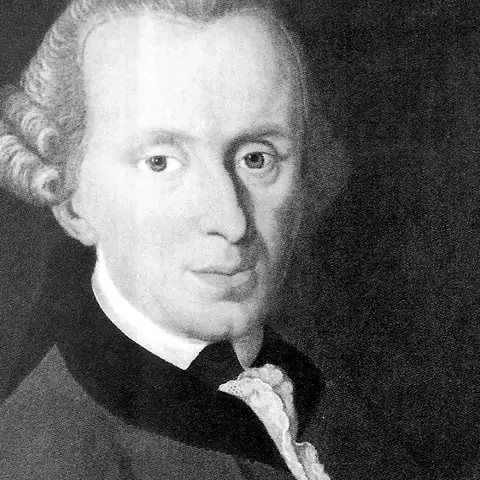
Immanuel Kant
Historical figureGermany1724-1804

Immanuel Kant

Philosopher · Professor of logic and metaphysics at the University of Konigsberg

Enlightenment philosopher who built politics on equal freedom under law, favored republics and called for a league of states to keep the peace.

Profile on 12 axes10 of 12 documented
ECONOMYSTATESOCIETYWORLDOwnershipMarketsWelfareAuthoritySecurityStructureMoralityReligionTechnologyCultureTradeForeign
Where they stood

Immanuel Kant, axis by axis

  1. PublicPrivate
  2. PlannedFree
  3. SharedSelf-reliant

    He liked free markets, but said citizens must help those who cannot help themselves and that the state may arrange this.

  4. DemocraticStrong leader

    Thought elected representatives in a republic were ideal and defended free writing, yet denied a right of revolution and said a monarch could rule in a republican spirit.

  5. LibertyOrder

    For Kant the ruler's judgment is final, so subjects may only petition and criticise in public. He also defended the death penalty as just punishment.

  6. 06StructureNo clear record
    LocalCentral
  7. ProgressiveTraditional

    He barred women and dependents from active citizenship, which pulls this axis toward the traditional side despite his Enlightenment ideals.

  8. SecularReligious
  9. 09TechnologyNo clear record
    EmbraceCaution
  10. MulticulturalNational identity

    His cosmopolitan right and his attacks on colonial violence point toward openness, but his early writing on race was discriminatory. Mild score.

  11. GlobalProtected
  12. CooperationStrength

2 axes have no clear record, so matching leaves them out.

Who was Immanuel Kant?

Kant lived almost his whole life in Konigsberg, the East Prussian city where he was born in 1724. His family were Lutherans influenced by Pietism. He taught at the local university and held its chair of logic and metaphysics from 1770. The Critique of Pure Reason, published in 1781, changed philosophy. His main political texts are the essay What Is Enlightenment?, the 1795 essay Toward Perpetual Peace and the Doctrine of Right from 1797. In 1794 King Frederick William II had him ordered to stop writing and teaching on religion. Kant died in Konigsberg in 1804. Today the city is Kaliningrad, in Russia.

Political views

  • Taught that each person has one inborn right, freedom: not being bound by another's will, so long as everyone's freedom can fit under one universal law.Source: plato.stanford.edu
  • Said a law is legitimate only if the whole people could agree to it, and treated the social contract as an idea of reason, not a past event.Source: plato.stanford.edu
  • Saw a republic with divided powers and elected representatives as the best form of government.Source: iep.utm.edu
  • Described enlightenment as daring to think for oneself, and said open public debate guards the people's rights.Source: plato.stanford.edu
  • Ruled out any right to rebel, yet read the opening of the French Revolution as a hopeful sign of progress.Source: plato.stanford.edu
  • In Perpetual Peace, he suggested that republics join in a federation, and that visitors should be able to claim a right of hospitality.Source: iep.utm.edu

Legacy

Kant ranks among history's most influential thinkers. His political thought fed liberal ideas about rights and the rule of law, and John Rawls drew on it. Many see Perpetual Peace as an early sketch of the League of Nations, the UN and the idea that democracies rarely fight each other. Supporters praise his stress on human dignity and equal freedom. Critics note that he shut women and poor men out of full citizenship, refused any right to resist even unjust rulers and defended the death penalty. His earlier writing that ranked human races is now a major point of scholarly debate, since it undercuts his claim to universal principles.

How close are you to Immanuel Kant?

Take the 12 Axes test and see which historical figure is your political twin, axis by axis.

Take the test

Immanuel Kant: questions

What is Kant's idea of perpetual peace?

In his 1795 essay, Kant argued that lasting peace needs states with republican constitutions, a federation joining them and a limited right for foreigners to be treated as guests.

Was Kant a democrat?

Not quite. He preferred a republic with elected lawmakers and separated powers, and he defended free speech. But he gave active citizenship only to some people and thought rulers should not be overthrown.

Did Kant believe in a right to revolt?

No. He allowed only peaceful petition and public criticism against a ruler. Even so, he treated the early French Revolution as evidence that history was moving toward moral progress.

Sources