12axes-testTake the test
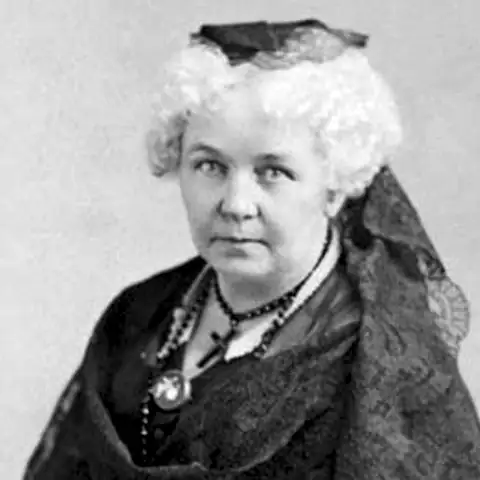
Elizabeth Cady Stanton
Historical figureUnited States1815-1902

Elizabeth Cady Stanton

Women's rights leader and organizer of the 1848 Seneca Falls Convention · First president of the National Woman Suffrage Association

Reformer and writer who wrote the Declaration of Sentiments for the 1848 Seneca Falls meeting, then campaigned for fifty years for women's votes, easier divorce and a secular state.

Profile on 12 axes6 of 12 documented
ECONOMYSTATESOCIETYWORLDOwnershipMarketsWelfareAuthoritySecurityStructureMoralityReligionTechnologyCultureTradeForeign
Where they stood

Elizabeth Cady Stanton, axis by axis

  1. 01OwnershipNo clear record
    PublicPrivate

    No worked-out view on economic ownership is known. Markets, welfare, technology, trade and foreign policy are null for the same reason.

  2. 02MarketsNo clear record
    PlannedFree
  3. 03WelfareNo clear record
    SharedSelf-reliant
  4. DemocraticStrong leader
  5. LibertyOrder
  6. LocalCentral

    She backed a national amendment on the vote and also state reforms, including the married women's property laws passed in New York.

  7. ProgressiveTraditional

    Few suffragists went as far as she did on easier divorce, custody rights and dress reform, so she lands clearly on the progressive side for her era.

  8. SecularReligious

    She wanted a secular state and used The Woman's Bible to attack male-centered theology.

  9. 09TechnologyNo clear record
    EmbraceCaution
  10. MulticulturalNational identity

    During the Fifteenth Amendment fight she made racially condescending remarks and argued against votes for immigrants and the uneducated. This is why she scores toward national identity.

  11. 11TradeNo clear record
    GlobalProtected
  12. 12Foreign policyNo clear record
    CooperationStrength

6 axes have no clear record, so matching leaves them out.

Who was Elizabeth Cady Stanton?

Elizabeth Cady Stanton grew up in Johnstown, New York, and married the abolitionist Henry Stanton. On their 1840 trip to London, women delegates were refused seats at a world anti-slavery meeting. That day she and Lucretia Mott agreed to organize a women's rights meeting. It took place at Seneca Falls in July 1848, and Stanton wrote most of its Declaration of Sentiments. After 1851 she teamed up with Susan B. Anthony: Stanton wrote, Anthony organized. She was an editor of the paper The Revolution, headed the National Woman Suffrage Association from 1869 and helped write a history of the cause. She died in 1902.

Political views

  • She wrote the Declaration of Sentiments, which put the denial of the vote at the head of women's complaints.Source: nps.gov
  • She treated marriage as a civil contract and pushed for looser divorce laws, including divorce for a husband's drunkenness.Source: en.wikipedia.org
  • She also pressed for property rights for wives, equal pay, wider job options, dress reform and changes in religion.Source: nps.gov
  • In 1863 she helped found the Women's Loyal National League, which gathered petitions for the Thirteenth Amendment to end slavery.Source: en.wikipedia.org
  • She turned against the Fourteenth and Fifteenth Amendments, since they gave Black men the vote but left out women.Source: womenshistory.org
  • She wanted a state separate from religion, and in The Woman's Bible she attacked orthodox teaching for holding women down.Source: womenshistory.org

Legacy

Admirers call Stanton the leading thinker of the women's movement in her century. Her Declaration of Sentiments set its goals, and her writing on marriage, divorce and religion pointed ahead to later feminism. Her decades of speeches and essays fed the campaign that finally won votes for women in 1920, long after she died. Critics and historians also point to serious faults. In the fight over the Fifteenth Amendment she used elitist and racially insulting language, which Frederick Douglass condemned and which split the movement. She mostly spoke for educated, property-owning women and argued against votes for immigrant men. Even other suffragists disliked The Woman's Bible.

In their own words

“We hold these truths to be self-evident; that all men and women are created equal; that they are endowed by their Creator with certain inalienable rights; that among these are life, liberty, and the pursuit of happiness.”
Declaration of Sentiments, Seneca Falls Convention, 1848

How close are you to Elizabeth Cady Stanton?

Take the 12 Axes test and see which historical figure is your political twin, axis by axis.

Take the test

Elizabeth Cady Stanton: questions

Was Elizabeth Cady Stanton a feminist?

Yes, though the word was not yet common in her day. She spent about fifty years arguing for women's votes, property rights and fairer marriage and divorce laws.

Why was Stanton against the Fifteenth Amendment?

It gave Black men the vote and left all women out. Her campaign against it used racist arguments that historians sharply criticize, and it broke the suffrage movement in two.

What did the Declaration of Sentiments say?

Stanton wrote most of this 1848 text for the Seneca Falls meeting. It copied the shape of the Declaration of Independence to list women's complaints and demand equal rights, including the vote.

Sources