12axes-testTake the test
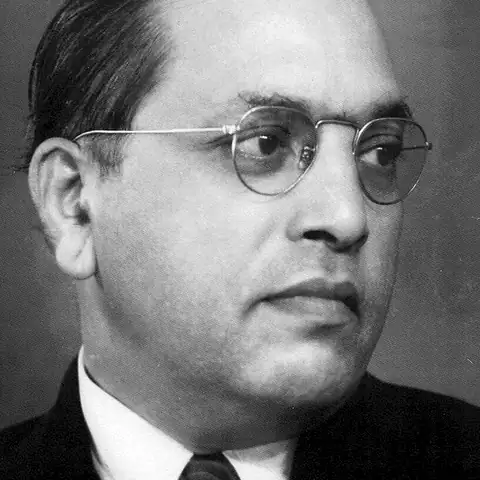
B. R. Ambedkar
Historical figureIndia1891-1956

B. R. Ambedkar

Chairman of the Drafting Committee of the Constitution of India · 1st Minister of Law and Justice of India (1947-1951)

Born into an untouchable caste, he became a lawyer, economist and Dalit leader, chaired the drafting of India's constitution and led a mass turn to Buddhism in 1956.

Profile on 12 axes9 of 12 documented
ECONOMYSTATESOCIETYWORLDOwnershipMarketsWelfareAuthoritySecurityStructureMoralityReligionTechnologyCultureTradeForeign
Where they stood

B. R. Ambedkar, axis by axis

  1. PublicPrivate

    He backed a kind of state socialism, with the state owning farmland, but he also valued a stable currency and a working economy, so his score leans toward public ownership.

  2. PlannedFree
  3. SharedSelf-reliant
  4. DemocraticStrong leader
  5. LibertyOrder

    He fought for civil liberties written into the constitution, though little is recorded about his views on policing. The score leans slightly toward liberty.

  6. 06StructureNo clear record
    LocalCentral

    His sources do not show a clear view on central versus local power, so this axis has no score.

  7. ProgressiveTraditional

    He attacked caste hierarchy and the power of Hindu scripture, and he pushed for women's rights through the Hindu Code Bill. That puts him clearly on the reforming side.

  8. SecularReligious

    He rejected Hinduism as oppressive, yet he chose Buddhism with a huge following because he thought a reformed faith could help society. The score is mildly secular.

  9. EmbraceCaution
  10. MulticulturalNational identity

    He said caste divided the nation and Indians should become one people, but he also defended special protection for the depressed classes. The mix puts him at the centre.

  11. 11TradeNo clear record
    GlobalProtected
  12. 12Foreign policyNo clear record
    CooperationStrength

3 axes have no clear record, so matching leaves them out.

Who was B. R. Ambedkar?

Bhimrao Ramji Ambedkar was born in 1891 into the Mahar caste, which Hindu society treated as untouchable. Despite that, he studied at Bombay, Columbia University and the London School of Economics and earned doctorates. From the 1920s he campaigned against untouchability and set up parties for workers and Scheduled Castes. When India became independent, he was its first law minister, and he chaired the committee that wrote the constitution. He quit the government in 1951 after Parliament stalled his Hindu Code Bill on family law. In October 1956 he became a Buddhist, and he died two months later.

Political views

  • Called for equal rights for women, an end to untouchability and reserved jobs and school places for people of lower castes.Source: bbc.com
  • Told Indians to use constitutional means only and give up civil disobedience, non-cooperation and satyagraha, which he described as the grammar of anarchy.Source: outlookindia.com
  • Said that worshipping political heroes leads to decline and in the end to dictatorship.Source: outlookindia.com
  • Believed that political democracy cannot survive without social democracy based on liberty, equality and brotherhood, and he said caste worked against the nation.Source: outlookindia.com
  • Put forward a form of state socialism in which the state owns farmland and shares out resources fairly, and he supported building industry.Source: en.wikipedia.org
  • Argued in Annihilation of Caste that ending caste meant rejecting the authority of the Hindu holy books.Source: en.wikipedia.org
  • Saw Hinduism as a faith that cut off the lower castes. In 1956 he started the Dalit Buddhist movement, which almost half a million people joined.Source: bbc.com

Legacy

Many Indians honour Ambedkar as the chief author of their constitution and the greatest voice of the Dalits. The BBC calls him the most revered Indian leader after Gandhi. Admirers point to the quotas and bans on discrimination he fought for, which still shape Indian law. Yet caste prejudice continues, even though untouchability was banned in 1950. Gandhi opposed his plan for separate electorates and fasted against it, which led to the Poona Pact of 1932 and reserved seats instead. Orthodox Hindus resented his attacks on their scriptures. Later in life Ambedkar himself grew unhappy with how the constitution was being applied.

In their own words

“Political democracy cannot last unless there lies at the base of it social democracy.”
Speech to the Constituent Assembly, 25 November 1949

How close are you to B. R. Ambedkar?

Take the 12 Axes test and see which historical figure is your political twin, axis by axis.

Take the test

B. R. Ambedkar: questions

Was Ambedkar a socialist?

He supported a form of state socialism, with state ownership of farmland and public control of key resources. He also defended parliamentary democracy and individual rights, so his views are often described as social democratic.

What is Ambedkar best known for?

He is known for leading the committee that wrote India's constitution, which banned untouchability and set up protections for lower castes. He was also the main political voice of the Dalits in his time.

Why did Ambedkar become a Buddhist?

He believed Hinduism supported caste and kept the lower castes down. After years of searching for another path, he took up Buddhism in 1956 in a public ceremony. Hundreds of thousands of followers joined him.

Sources