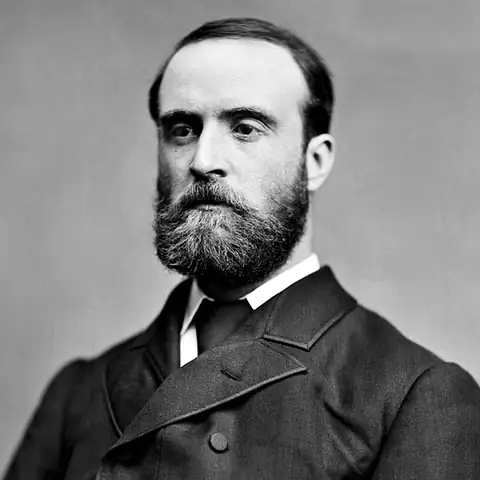
Who was Charles Stewart Parnell?
Parnell was born in 1846 in County Wicklow, the son of a landlord. He entered the House of Commons in 1875 as MP for Meath and joined the Obstructionists who disrupted Parliament. In 1879 he became president of the Irish National Land League, and in 1880 he was elected leader of the Irish Parliamentary Party. He was jailed at Kilmainham in 1881 and freed under the Kilmainham Treaty in 1882. In 1885 eighty-five Home Rule MPs won seats and Gladstone announced his conversion to Home Rule, but the 1886 bill was defeated. In 1890 the O'Shea divorce case split his party, and he died in October 1891.
Political views
- He opposed the Irish land laws from 1878 and treated land reform as a first step toward Home Rule.Source: meathchronicle.ie
- In his maiden speech he argued that Ireland was a nation in its own right, not a geographical fragment of England.Source: meathchronicle.ie
- He advised tenant farmers to keep a firm grip on their homesteads.Source: meathchronicle.ie
- He backed Gladstone in 1880 but joined the opposition when the 1881 Land Act fell short.Source: meathchronicle.ie
- He toured America to raise money and support, and he kept contact with the Fenians while leading a constitutional party at Westminster.Source: cartlann.org
- In 1886 he limited the Plan of Campaign to 116 estates, which angered John Dillon and William O'Brien.Source: historyhome.co.uk
- He renamed the Home Rule League the Irish Parliamentary Party and made it his vehicle for Home Rule.Source: cartlann.org
- In 1887 The Times printed a letter linking him to the Phoenix Park murders; it was later shown to be a forgery by Richard Pigott.Source: historyhome.co.uk
Legacy
Admirers remember Parnell as the uncrowned king of Ireland, the man who built a disciplined party, united tenants and nationalists, and won Gladstone's conversion to Home Rule. Crowds in Meath stayed loyal to him long after his death. Critics note that Home Rule never passed in his lifetime, that his obstruction and Land League agitation were denounced by opponents, and that he was jailed in 1881 after a speech the government judged violent. Radicals such as Dillon and O'Brien chafed at his limits on the Plan of Campaign. His affair with Katharine O'Shea split the party in 1890.