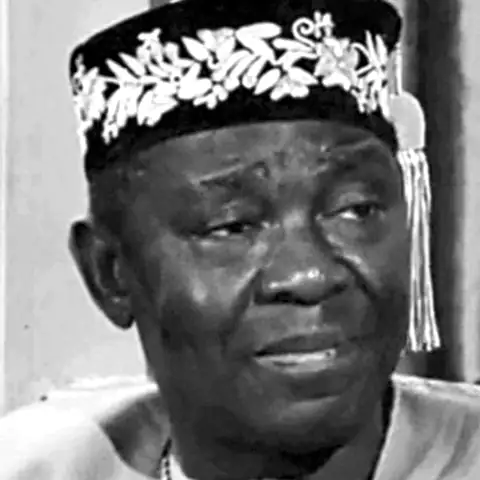
Who was Nnamdi Azikiwe?
Azikiwe was born in 1904 and studied in the United States, where he took degrees at Lincoln University and met leaders of the Back to Africa movement. He returned to West Africa and in 1937 founded the West African Pilot to press for independence. He co-founded the National Council of Nigeria and the Cameroons, which he later led, and served as Premier of the Eastern Region. When Nigeria became independent in 1960 he was named governor-general, and in 1963 he became the first president of the republic. A military coup removed him in 1966. During the Biafran war he first backed the breakaway state, then switched to the federal side in 1969. He died in 1996.
Political views
- He studied political science in the United States from 1925 and met Marcus Garvey and other leaders of the Back to Africa movement.Source: kinginstitute.stanford.edu
- After returning in 1934 he joined the Nigerian Youth Movement and founded newspapers that argued for independence from Britain.Source: kinginstitute.stanford.edu
- He co-founded the National Council of Nigeria and the Cameroons, and served as its secretary and later its president.Source: cbn.gov.ng
- His philosophy of African liberation, known as Zikism, named spiritual balance, social regeneration, economic determination, mental emancipation and political resurgence.Source: newworldencyclopedia.org
- He became Premier of the Eastern Region in 1954, and he championed federalism.Source: newworldencyclopedia.org
- He was Governor-General from 1960 and first President of Nigeria from 1963 until the military removed him in 1966.Source: cbn.gov.ng
- In the Biafran war (1967-1970) he became a spokesman for the Igbo republic and then, in 1969, switched to the federal government's side.Source: newworldencyclopedia.org
Legacy
Admirers call Azikiwe the father of Nigerian nationalism. His newspapers and party built the case for independence, and he is remembered as a founding president whose portrait appears on the 500 naira note. Critics note that the presidency he held was largely ceremonial and that the First Republic ended in a coup within three years. Others point to his shifting position during the Biafran war, when he first spoke for the secessionist state and later returned to the federal side. Historians still debate how much power he had at key moments, including the 1966 coup that spared him.